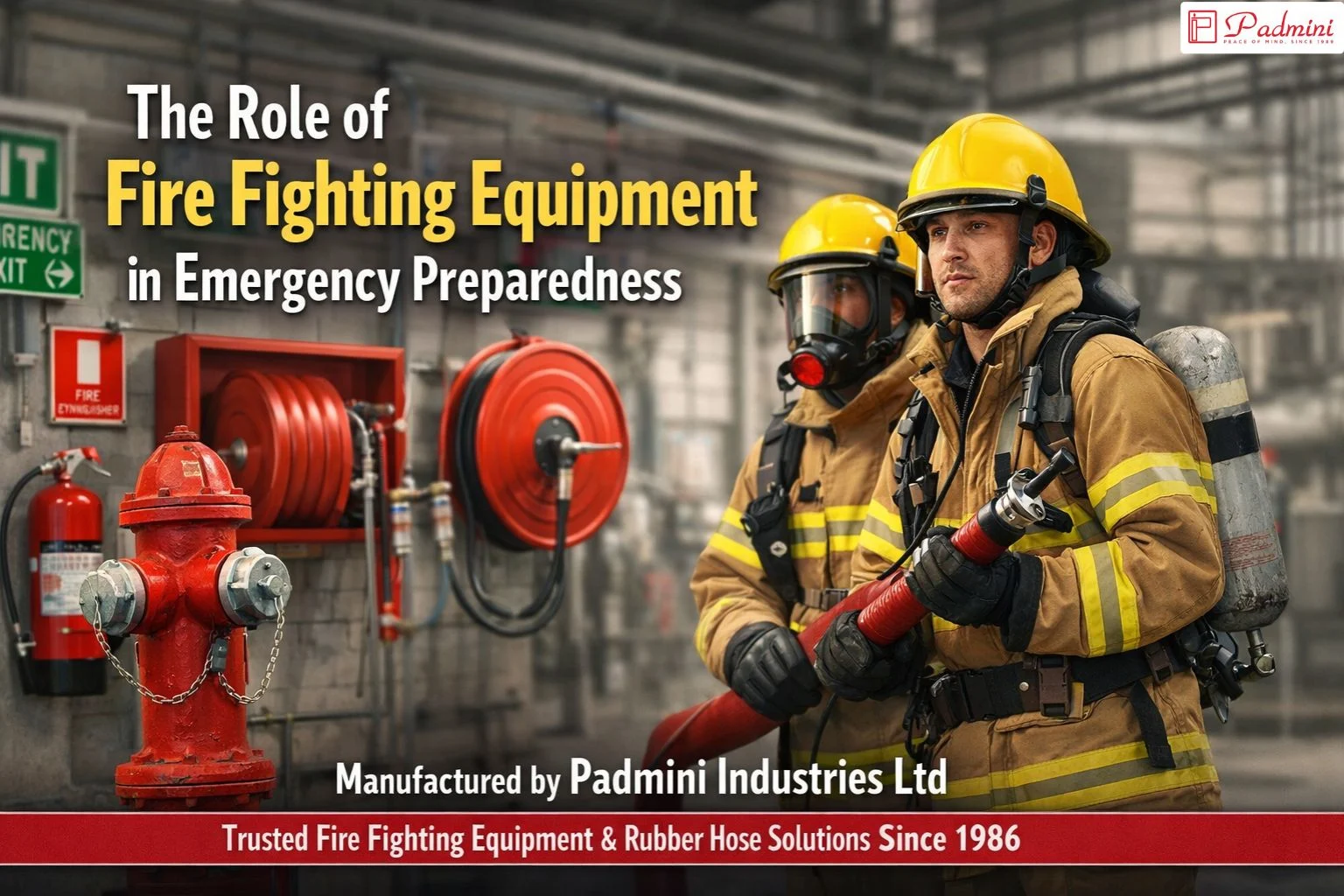
Fire emergencies are sudden, destructive, and often unforgiving. In industrial plants, commercial buildings, and institutions, a small spark can quickly turn into a life-threatening situation if proper fire safety systems are not in place. Emergency preparedness is not just about reacting to fire—it is about reducing risk, protecting people, and controlling damage before it spreads.
At Padmini Industries Ltd, we have spent over 35 years manufacturing dependable fire fighting equipment and rubber hose solutions designed to perform when it matters most. Since entering the fire safety sector in 2002, our focus has remained clear: protecting lives and assets through reliable, certified, and performance-driven fire protection systems.
This article explains the critical role fire fighting equipment plays in emergency preparedness, especially in Indian industrial and commercial environments.
Understanding Emergency Preparedness in Fire Safety
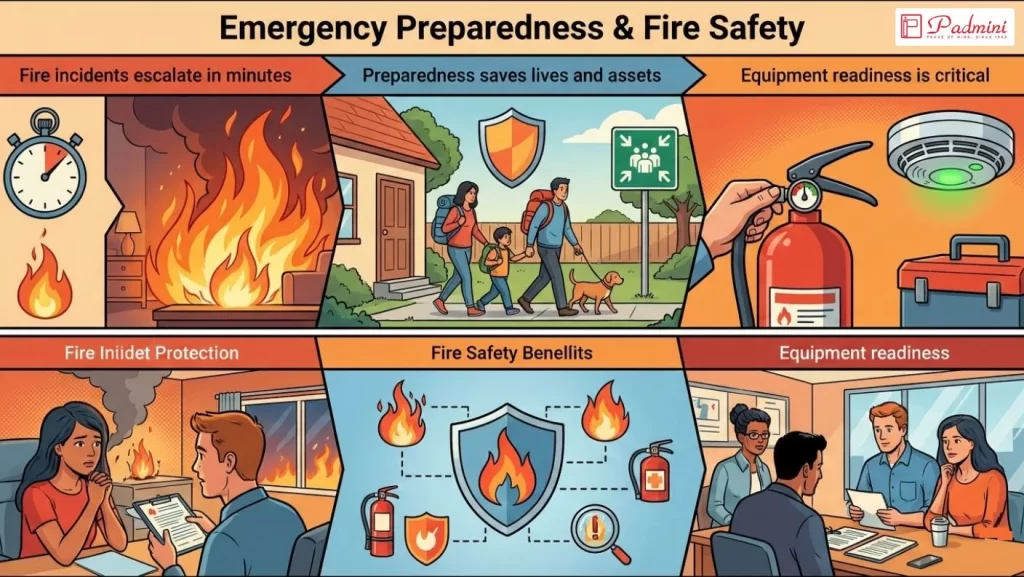
Emergency preparedness means having the right systems, equipment, and response plans ready before a fire incident occurs. It is not limited to installing fire extinguishers or hydrants—it includes planning, integration, maintenance, and staff awareness.
In India, many fire incidents escalate because:
- Fire detection is delayed
- Equipment is inadequate or poorly maintained
- Power failures disable safety systems
- Evacuation plans are not supported by fire control measures
Well-designed fire fighting equipment acts as the first line of defence, buying valuable time for evacuation and professional fire response.
Importance of Fire Fighting Equipment in Risk Reduction
Early Control Saves Lives and Assets
The biggest advantage of fire fighting equipment is risk reduction. Fires grow rapidly in the first few minutes. Equipment such as fire extinguishers, hydrant systems, hose reels, and suppression systems help control the fire at its early stage.
When fire is tackled quickly:
- Human injuries are reduced
- Structural damage remains limited
- Machinery and inventory losses are controlled
- Business downtime is minimised
At Padmini Industries Ltd, our BIS-certified fire fighting equipment is designed for high performance under real emergency conditions, ensuring reliability when immediate action is required.
Compliance with Indian Safety Standards
Industrial and commercial facilities in India must comply with:
- National Building Code (NBC)
- Local fire authority norms
- Insurance and safety audit requirements
Using certified and properly rated fire fighting equipment not only improves safety but also helps organisations avoid legal and financial risks.
Padmini’s manufacturing facility in Dundhera, District Baghpat (Uttar Pradesh) follows strict quality controls, modern safety processes, and standardised testing to ensure dependable performance across all products.
Integration of Fire Fighting Equipment with Evacuation Plans
Fire Safety and Evacuation Must Work Together
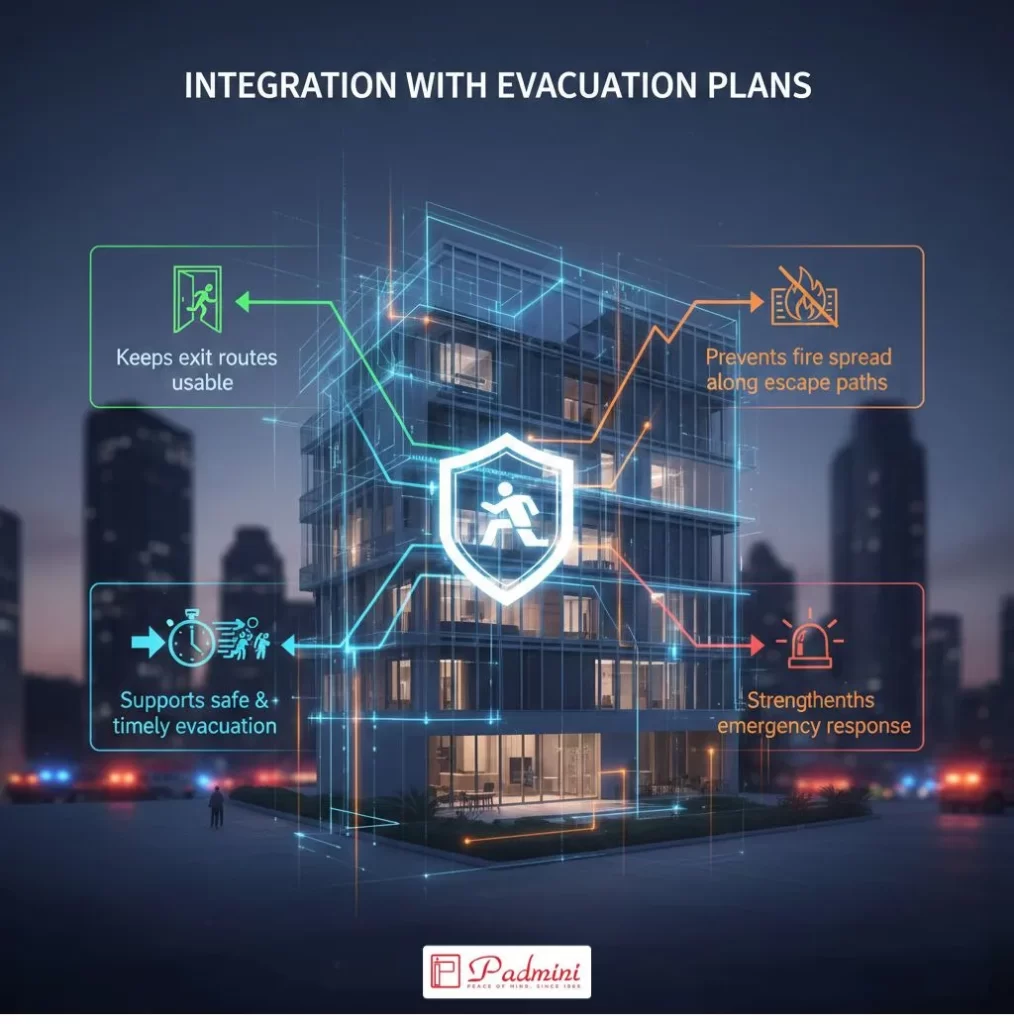
An evacuation plan without fire fighting support is incomplete. Fire fighting equipment plays a vital role in supporting safe evacuation.
For example:
- Fire extinguishers allow trained staff to control small fires blocking exits
- Hose reels help contain fire spread along escape routes
- Hydrant systems protect staircases and assembly points
- Fire suppression systems reduce heat and smoke levels
This integration ensures that evacuation routes remain usable for a longer time, allowing occupants to exit safely.
Real-World Workplace Preparedness
In Indian factories and warehouses, evacuation routes often pass near:
- Electrical panels
- Storage racks
- Flammable raw materials
Strategically placed fire fighting equipment helps contain the fire source, preventing it from cutting off escape paths.
At Padmini Industries Ltd, we supply complete fire fighting solutions under one roof, allowing facilities to design fire safety layouts that align perfectly with evacuation planning.
Role of Fire Fighting Equipment During Power Failures or System Malfunctions
When Power Goes Out, Safety Must Continue
Power failure during a fire is common due to:
- Electrical short circuits
- Heat damage to cables
- Automatic system shutdowns
In such situations, fire fighting equipment that operates independently of power becomes critical.
Key examples include:
- Manual fire extinguishers
- Fire hose reels connected to gravity or pump-fed systems
- Fire hydrants with diesel pump support
- Rubber fire hoses designed for high pressure and durability
Padmini’s experience in rubber hose manufacturing ensures that our fire hoses perform reliably even under extreme pressure and temperature conditions.
Mechanical Reliability Over Automation Alone
While automatic fire detection and suppression systems are important, manual fire fighting equipment remains essential as a backup during system failures.
This layered approach—manual plus automatic—ensures that emergency response does not stop due to technical faults.
Industrial Fire Response: A Practical Case Example
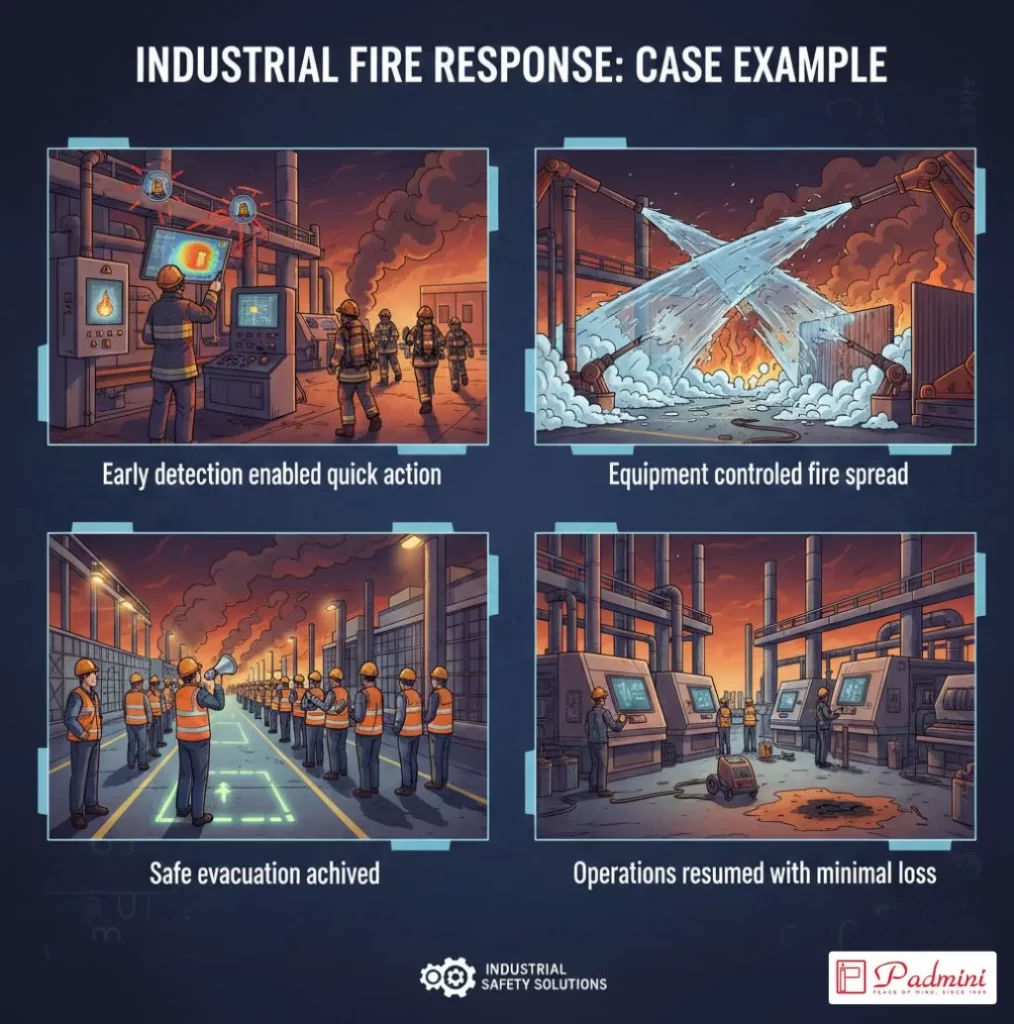
Scenario: Manufacturing Plant Fire Incident
Consider a mid-sized industrial manufacturing unit operating multiple shifts. Late at night, a fire breaks out near a machine panel due to insulation failure.
What prevented a major disaster?
- Smoke was detected early
- Trained staff used nearby fire extinguishers to control initial flames
- Fire hydrant and hose reel systems prevented fire spread to stored raw materials
- Power failure did not stop response due to manual systems
- Evacuation routes remained accessible
As a result:
- No injuries occurred
- Fire damage was limited to a small area
- Production resumed after minimal downtime
This kind of response is possible only when quality fire fighting equipment is properly installed, maintained, and supported by preparedness planning.
Why Equipment Quality and Manufacturing Expertise Matter
Not all fire fighting equipment performs the same under pressure. Poor-quality products may fail due to:
- Hose bursting
- Valve leakage
- Inadequate pressure handling
- Material degradation
At Padmini Industries Ltd, our 35+ years of manufacturing expertise ensures:
- Consistent material quality
- Performance-tested products
- Long service life
- Compliance with Indian safety standards
Our transition from industrial hose manufacturing to fire safety in 2002 was driven by the need for dependable, Indian-made solutions that meet real-world conditions.
Fire Preparedness Is an Ongoing Responsibility
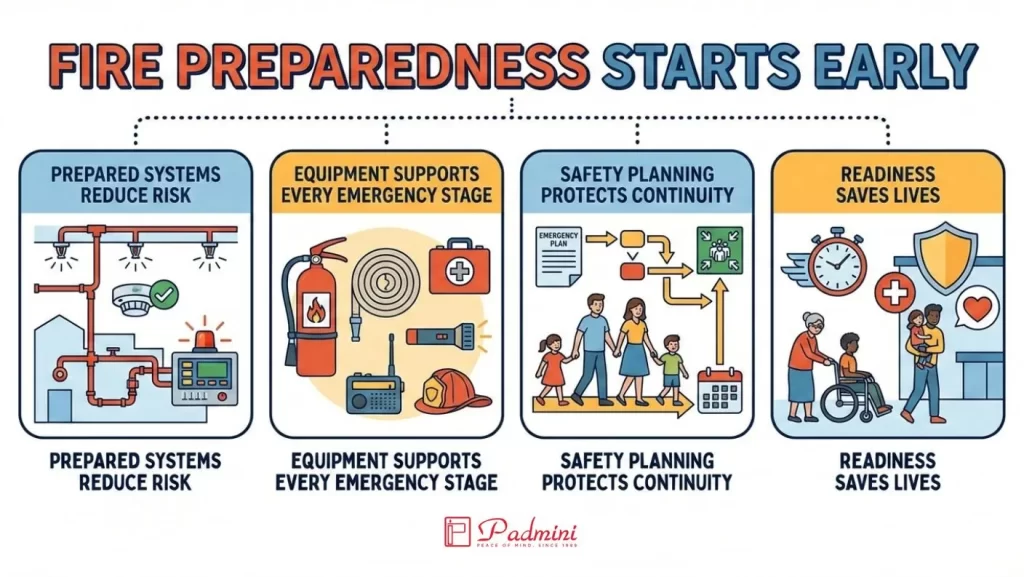
Emergency preparedness is not a one-time task. It requires:
- Periodic equipment inspection
- Staff training
- System upgrades
- Layout reviews based on operational changes
Organisations that invest in reliable fire fighting equipment protect not only assets but also people, reputation, and continuity.
Conclusion: Preparedness Begins with the Right Equipment
Fire emergencies cannot be predicted, but their impact can be controlled. Fire fighting equipment plays a central role in:
- Reducing risk
- Supporting safe evacuation
- Operating during power failures
- Enabling effective industrial fire response
At Padmini Industries Ltd, we continue to support India’s industrial, commercial, and institutional sectors with certified fire fighting equipment and rubber hose solutions built for performance, safety, and trust.




Leave a Reply