Fire safety is not just about installing equipment. It is about ensuring that every fire fighting product performs reliably when it is needed the most. In India, fire fighting equipment must go through strict testing and certification processes to meet safety, quality, and legal requirements.
At Padmini Industries Ltd, we believe that certified and properly tested fire fighting equipment is the foundation of effective fire protection. With over 35 years of manufacturing experience, we help industries, commercial facilities, and institutions stay compliant with Indian fire safety norms through dependable, BIS-certified solutions.
This article explains, in simple language, how fire fighting equipment testing and certification works in India, what tests are required, and why compliance matters.
Why Testing and Certification of Fire Fighting Equipment Is Critical
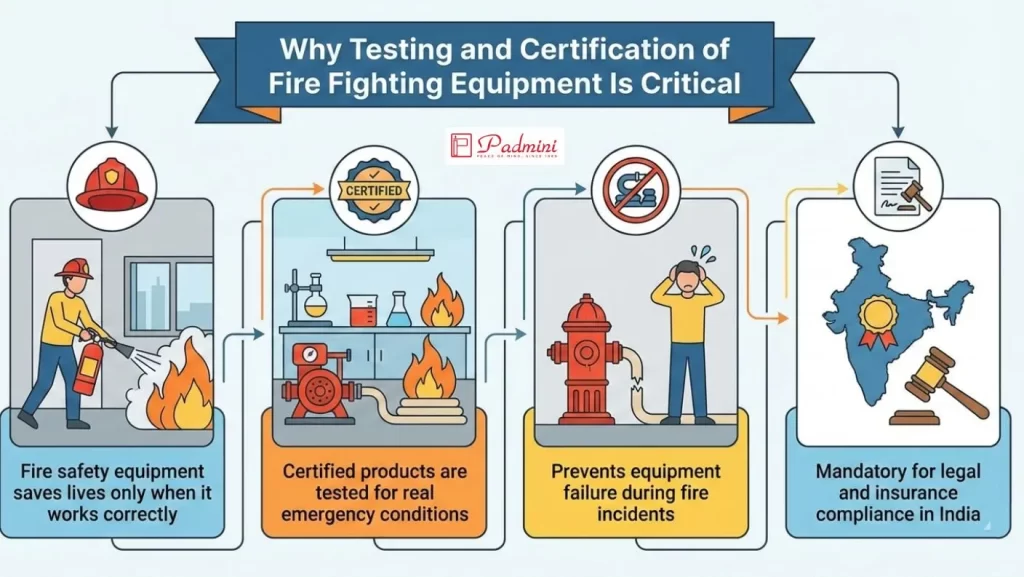
Fire fighting equipment is classified as life-safety equipment. Any failure during a fire emergency can lead to serious loss of life and property. This is why Indian regulations require products to be tested against defined standards before they are supplied or installed.
Proper testing and certification ensure that:
- Equipment works under real fire and pressure conditions
- Materials can withstand heat, water pressure, and long-term use
- Products meet legal and insurance compliance requirements
- Buyers avoid penalties, project delays, and rejection in audits
For industrial and commercial projects, using uncertified fire fighting equipment can also result in rejection by fire authorities and insurance agencies.
BIS and Third-Party Testing Laboratories in India
Role of BIS (Bureau of Indian Standards)
The Bureau of Indian Standards (BIS) is India’s national standards body. BIS certification confirms that a fire fighting product complies with the relevant Indian Standard (IS) specifications.
Common fire safety products requiring BIS certification include:
- Fire hoses
- Fire extinguishers
- Hose reels
- Landing valves and hydrant components
A BIS mark indicates that the product has passed:
- Design evaluation
- Factory inspection
- Sample testing at approved laboratories
At Padmini Industries Ltd, our fire fighting equipment and rubber hose solutions are manufactured in accordance with applicable BIS standards, ensuring reliability and regulatory acceptance.
Third-Party Testing Laboratories
In addition to BIS, products are tested at NABL-accredited third-party laboratories. These independent labs verify performance parameters under controlled conditions.
Third-party testing helps:
- Validate product quality objectively
- Support BIS certification and renewals
- Meet project-specific or tender-based testing requirements
Manufacturers must submit test reports during approvals, audits, and large industrial installations.
Types of Tests Conducted on Fire Fighting Equipment
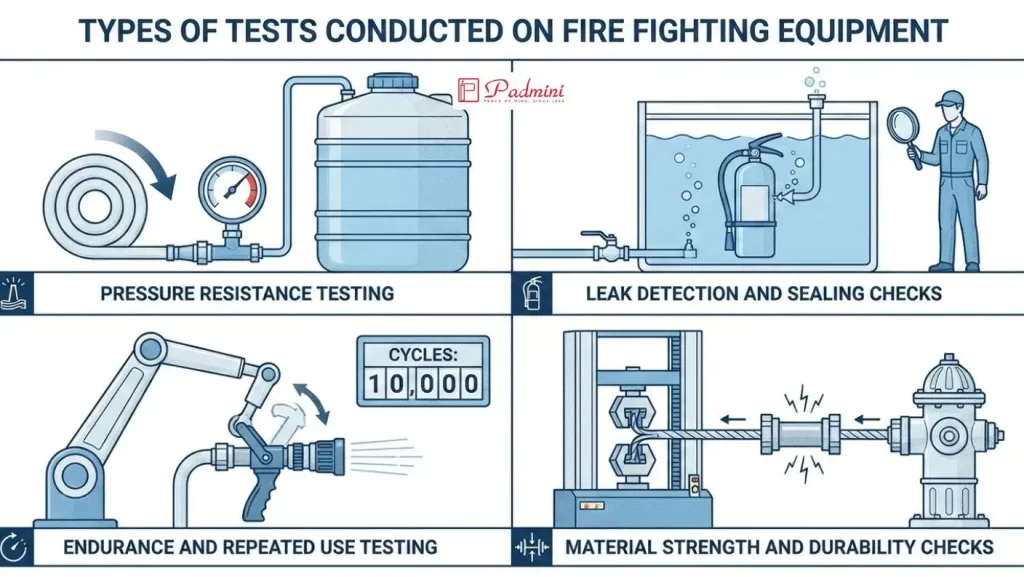
Different fire fighting products undergo specific tests based on their application. Below are the most common tests carried out in India.
1. Pressure Testing
Pressure testing checks whether equipment can handle operating and surge pressures without failure.
- Fire hoses are tested at higher-than-working pressure
- Valves and hydrant systems are checked for deformation or rupture
- Ensures safety during continuous water flow
This test is especially critical for industrial fire networks.
2. Leak Testing
Leak tests ensure that there is no water or pressure loss during operation.
- Detects joint, coupling, or material defects
- Prevents pressure drops during emergency use
- Mandatory for hoses, valves, and assemblies
Leak-free equipment is essential for effective fire suppression.
3. Endurance and Performance Testing
Endurance tests simulate long-term use and harsh operating conditions.
- Repeated pressurisation cycles
- Flexibility and wear resistance checks (for hoses)
- Operational reliability over time
These tests confirm that equipment will perform consistently throughout its service life.
Certification Renewal Process in India
Fire fighting equipment certification is not a one-time process. BIS certification must be renewed periodically to ensure continued compliance.
What Certification Renewal Involves
- Regular factory inspections by BIS officials
- Fresh sample testing from production batches
- Review of manufacturing processes and quality controls
- Verification of marking and traceability
If a product fails during renewal testing, corrective actions are mandatory before certification continues.
At Padmini Industries Ltd, certification renewal is treated as a core quality activity, ensuring that every batch maintains the same safety and performance standards.
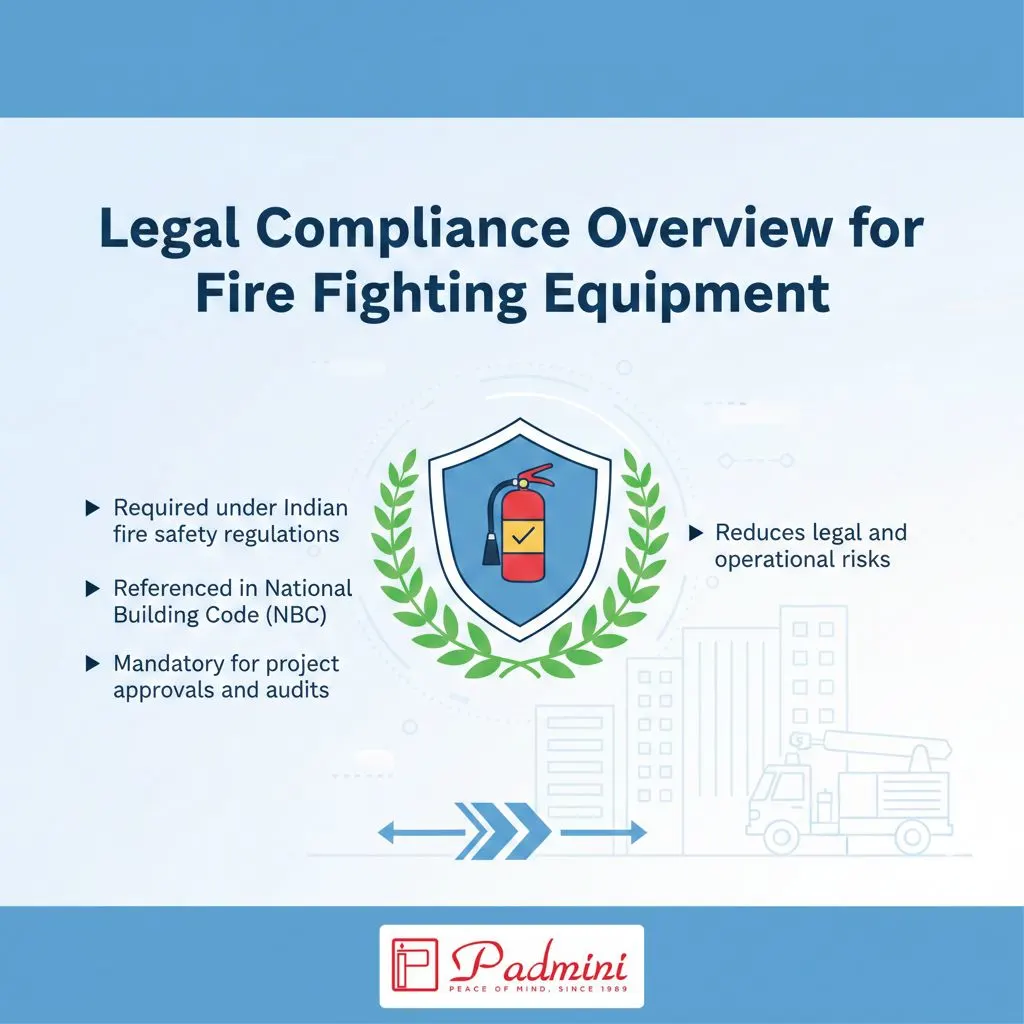
Legal Compliance Overview for Fire Fighting Equipment
Applicable Regulations in India
Fire fighting equipment compliance is governed by:
- BIS Act and Indian Standards (IS codes)
- State Fire Service rules
- National Building Code (NBC) of India
- Insurance and factory safety norms
Authorities may inspect installations during:
- Factory licensing
- Building occupancy approvals
- Safety audits and renewals
Consequences of Non-Compliance
Using uncertified or untested equipment can result in:
- Project approval delays
- Rejection by fire authorities
- Insurance claim denial
- Legal penalties and operational shutdowns
This is why certified fire fighting equipment is not optional—it is a legal and safety necessity.
How Padmini Industries Ltd Supports Fire Safety Compliance
Founded in 1986 by Mr. S.K. Jain and his brothers, Padmini Industries Ltd has grown from a hose trading company into a trusted Indian manufacturer of fire fighting equipment and suppression systems.
From our 4000 sq. meter manufacturing facility in Dundhera, District Baghpat (Uttar Pradesh), we offer:
- BIS-certified fire fighting equipment
- High-performance rubber fire hoses
- Complete fire suppression solutions
- In-house quality checks and compliance support
By offering everything under one roof, we help customers meet regulatory requirements without complexity or compromise.
Final Thoughts
Fire fighting equipment testing and certification are essential to ensure safety, reliability, and legal compliance. From BIS approval and third-party testing to renewal audits and pressure testing, every step plays a vital role in protecting lives and assets.
Choosing certified equipment from a trusted manufacturer ensures peace of mind, regulatory acceptance, and long-term performance.




Leave a Reply