
Fire accidents can cause serious loss of life, property, and business continuity if not handled in the first few minutes. Choosing the right type of fire extinguisher is not just a legal requirement—it is a practical safety decision every office, factory, and commercial space in India must take seriously.
At Padmini Industries Ltd, with over 35 years of manufacturing experience in fire fighting equipment, we often see one common issue during site inspections: fire extinguishers are present, but not suitable for the type of fire risk. This article explains the types of fire extinguishers, fire classes (A, B, C, D, and Electrical), and their correct use-cases, with clear examples for offices, factories, and kitchens.
Understanding Fire Classes Before Choosing an Extinguisher

Every fire behaves differently depending on what is burning. That is why fire extinguishers are designed for specific fire classes.
Class A – Solid Material Fires
Examples:
Wood, paper, cloth, rubber, plastic, furniture
Common Locations:
Offices, schools, hospitals, warehouses
Risk:
These fires spread slowly but generate heavy smoke and heat.
Class B – Flammable Liquid Fires
Examples:
Petrol, diesel, oil, grease, paints, solvents
Common Locations:
Factories, fuel storage areas, workshops, garages
Risk:
These fires spread rapidly and can re-ignite if not handled correctly.
Class C – Flammable Gas Fires
Examples:
LPG, CNG, propane, butane
Common Locations:
Commercial kitchens, gas storage areas, industrial plants
Risk:
Gas leaks can lead to explosions if flames are not controlled immediately.
Class D – Metal Fires
Examples:
Magnesium, sodium, potassium, aluminium powder
Common Locations:
Heavy engineering units, metal processing factories
Risk:
Water or common extinguishers can make these fires worse.
Electrical Fires (Class E – Practical Use Term)
Examples:
Live electrical panels, servers, machines, wiring
Common Locations:
Offices, data centres, factories, control rooms
Risk:
Using water-based extinguishers can cause electric shock.
Detailed List of Fire Extinguishers and Their Specific Uses
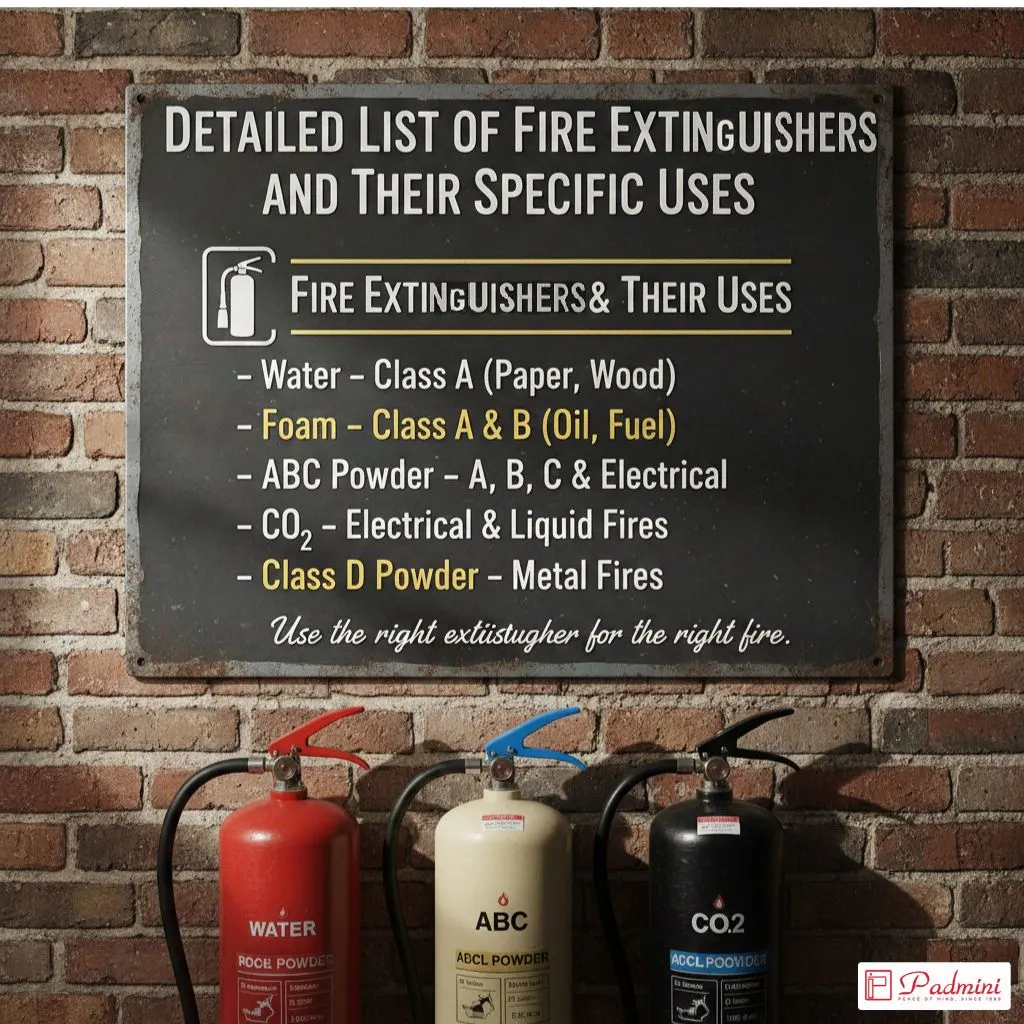
Water Fire Extinguishers
Best For:
✔ Class A fires
How It Works:
Cools the burning material and removes heat.
Where to Use:
- Offices
- Schools
- Paper storage areas
Do Not Use On:
Electrical fires, oil fires, gas fires
Foam Fire Extinguishers
Best For:
✔ Class A
✔ Class B
How It Works:
Forms a blanket over the liquid fire and cuts oxygen supply.
Where to Use:
- Factories
- Fuel handling areas
- Chemical storage rooms
Do Not Use On:
Live electrical equipment
Dry Chemical Powder (ABC Type)
Best For:
✔ Class A
✔ Class B
✔ Class C
✔ Electrical fires
How It Works:
Breaks the chemical reaction of fire.
Where to Use:
- Offices
- Factories
- Workshops
- Electrical rooms
Why It’s Popular in India:
One extinguisher covers multiple risks.
CO₂ (Carbon Dioxide) Fire Extinguishers
Best For:
✔ Electrical fires
✔ Class B fires
How It Works:
Displaces oxygen and suffocates the fire.
Where to Use:
- Electrical panels
- Server rooms
- Control rooms
Important Note:
Not effective for open-air Class A fires.
Class D Powder Fire Extinguishers
Best For:
✔ Class D metal fires only
How It Works:
Special powder absorbs heat and isolates burning metal.
Where to Use:
- Metal manufacturing units
- Foundries
- Engineering plants
Warning:
Never use water or foam on metal fires.
Clean Agent Fire Extinguishers
Best For:
✔ Electrical fires
✔ Sensitive equipment areas
How It Works:
Extinguishes fire without leaving residue.
Where to Use:
- Data centres
- Laboratories
- Hospitals
Right Fire Extinguisher for Different Locations
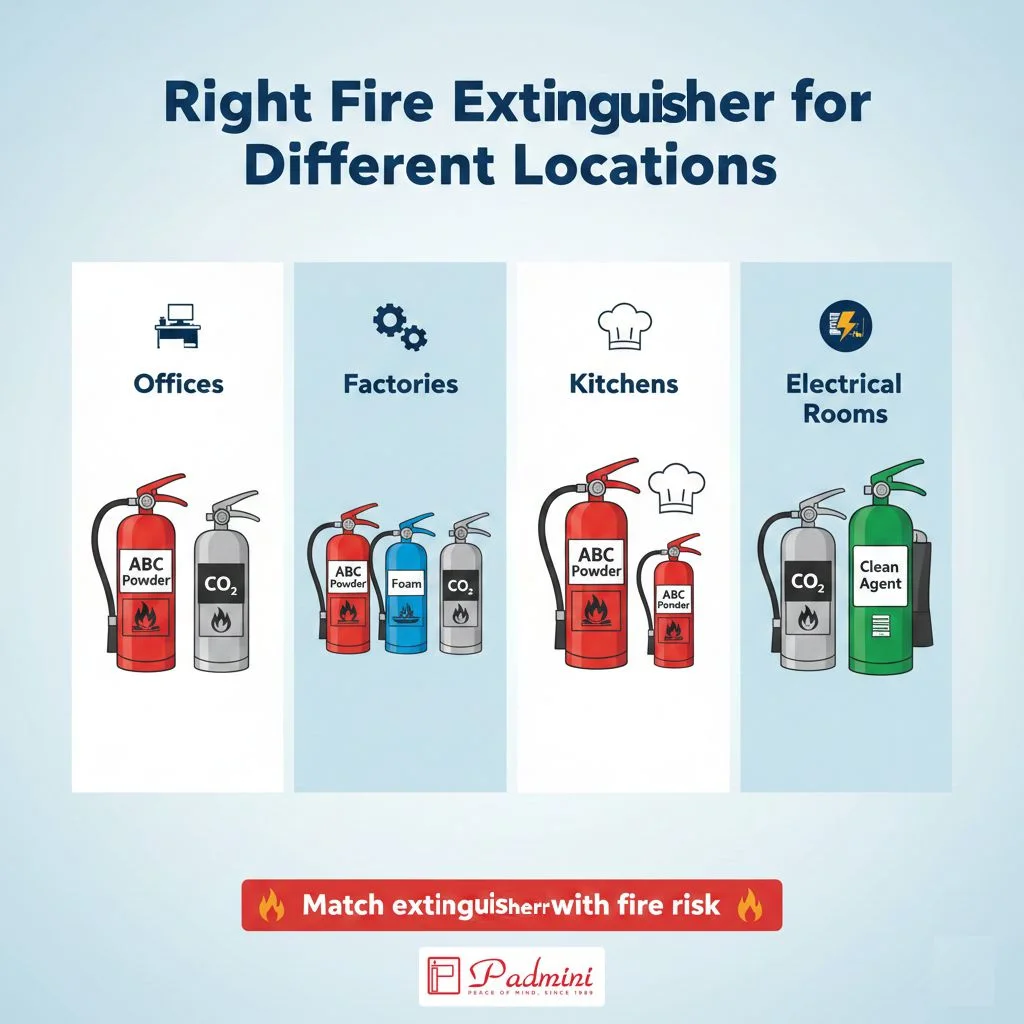
Offices & Commercial Buildings
Recommended:
- ABC Dry Powder
- CO₂ for electrical panels
Why:
- Paper, furniture, and electrical risks are common
Factories & Industrial Units
Recommended:
- ABC Dry Powder
- Foam
- CO₂
- Class D (where metal risk exists)
Why:
- Mixed fire hazards require multiple extinguisher types
Commercial Kitchens & Hotels
Recommended:
- ABC Dry Powder
- CO₂ near electrical equipment
- Specialized kitchen fire solutions
Why:
- Oil, gas, and electrical fires occur together
Why Choosing the Correct Extinguisher Matters
Using the wrong extinguisher can:
- Spread the fire
- Cause electric shock
- Lead to equipment damage
- Put lives at risk
Indian safety standards and BIS guidelines clearly state that fire extinguishers must match the fire risk present at the site.
Padmini Industries Ltd – Your Trusted Fire Safety Partner
At Padmini Industries Ltd, we manufacture and supply BIS-certified fire fighting equipment and rubber hose solutions for India’s industrial, commercial, and institutional sectors.
Founded in 1986 by Mr. S.K. Jain and his brothers, Padmini has grown from a small trading firm into a full-scale manufacturing company, with a modern facility in Dundhera, District Baghpat, Uttar Pradesh, spread across 4000 sq. meters. Our product range covers everything from fire extinguishers to complete fire suppression systems, all under one roof.
With decades of field experience, we help customers not just buy equipment—but choose the right solution for their actual fire risk.
Final Safety Advice
- Conduct a fire risk assessment before selecting extinguishers
- Install the correct type at visible and accessible locations
- Train staff on basic fire extinguisher use
- Maintain and inspect equipment regularly
Get expert guidance on selecting the right fire extinguisher for your industrial setup
Our team at Padmini Industries Ltd is ready to help you design a fire safety solution that protects lives, assets, and operations—without guesswork.



Leave a Reply