Fire safety in India has evolved rapidly over the last decade. As industries, commercial buildings, and high-risk environments grow more complex, the need for reliable fire protection becomes even more critical. At Padmini Industries Ltd, with over 35 years of manufacturing experience, we often see customers confused between fire extinguishers and fire suppression systems.
Both protect against fire — but they work very differently and are used in different situations.
This detailed guide explains the difference in a simple, practical, Indian context, so you can make the right choice for your facility.
1. What Is a Fire Extinguisher?

A fire extinguisher is a manual firefighting device used by a person to control or extinguish small fires. It is the first line of defence in any building.
Key Features
- Operated manually by a trained individual
- Best for incipient-stage or early fires
- Portable and affordable
- Mandatory in almost all Indian buildings as per NBC (National Building Code)
- Quick to deploy in case of immediate fire threats
Common Types (Offered at Padmini)
- ABC Dry Powder Extinguishers
- CO₂ Extinguishers
- Water & Foam Extinguishers
- Clean Agent Extinguishers
- Modular Automatic Extinguishers (Heat-activated for local protection)
2. What Is a Fire Suppression System?
A fire suppression system is an automatic or semi-automatic system designed to detect, control, and extinguish fire — even if no one is present.
These systems activate through:
- Heat sensors
- Smoke detectors
- Flame detectors
- Pressure or thermal triggers
Suppression systems are used in areas where fire must be controlled within seconds to prevent large-scale damage.
Common Suppression Solutions Used in India
- Clean Agent Suppression Systems
- Kitchen Fire Suppression Systems
- CO₂ Flooding Systems
- Water Mist Systems
- Foam-based Systems
- Vehicle Engine Fire Suppression
- Cable and Electrical Panel Protection
Padmini Industries offers complete suppression solutions, from system design to commissioning — all under one roof at our 4000 sq. metre facility in Dundhera, Baghpat.
3. Manual vs Automatic Systems: The Core Difference
Fire Extinguishers (Manual)
- Need a trained person to operate
- Effective only if someone is physically present
- Useful for early-stage fires
- Ideal for general buildings, offices, shops, and low-risk areas
Fire Suppression Systems (Automatic)
- Activate instantly without human involvement
- Protect high-value equipment and critical operations
- Detect and extinguish fire in seconds
- Work 24/7 even during night, holidays, shutdowns, or vacancies
Simple Example for Indian Context
- Fire extinguisher = Like a first-aid kit — quick, immediate, but manual
- Fire suppression system = Like an ICU setup — advanced, automatic, and critical for high-risk zones
4. Installation & Cost Comparison

Indian facility managers often ask: “Which is more cost-effective?”
Here’s a clear comparison:
Fire Extinguishers
Installation:
- Very simple
- Mounting brackets or stands
- Basic signage & visibility
- One-time installation + annual refilling
Cost Range in India:
- Generally low
- Suitable for all building types
- Perfect for compliance and basic safety
Fire Suppression Systems
Installation:
- Detailed site study
- Hazard assessment
- System design & engineering
- Piping, nozzles, sensors, detection panels
- Commissioning & routine maintenance
Cost Range in India:
- Higher initial investment
- Depends on area size, hazard type, and agent used
- Long-term savings by preventing major damage to machinery, data, inventory, or infrastructure
A suppression system may feel costly at first — but for server rooms, kitchens, CNC machines, vehicles, or electrical panels, it often saves 10x the investment by preventing downtime and losses.
5. When to Use Which System?
Choose Fire Extinguishers When:
- Risk level is low to moderate
- Staff is trained
- Fire loads are standard (offices, stores, cabins, schools, shops)
- Compliance requires portable equipment
Examples:
Reception areas, classrooms, corridors, workshops, retail stores.
Choose Fire Suppression Systems When:
- Fire must be controlled within seconds
- Human presence cannot be guaranteed
- Equipment or operations are high-value
- Fire risks involve oil, cleaning agents, servers, wood dust, kitchen fumes, electrical panels, or engines
Examples:
- Commercial kitchens
- CNC machines
- Server rooms & data centers
- Vehicle engines
- Transformer rooms
- Manufacturing units
- Hazardous material storage
Best Practice: Use Both Together
Most Indian industries now use:
- Fire extinguishers for first response
- Fire suppression systems for continuous, automatic protection
This combined approach ensures compliance + safety + operational continuity.
6. Why Choose Padmini Industries Ltd for Fire Safety?
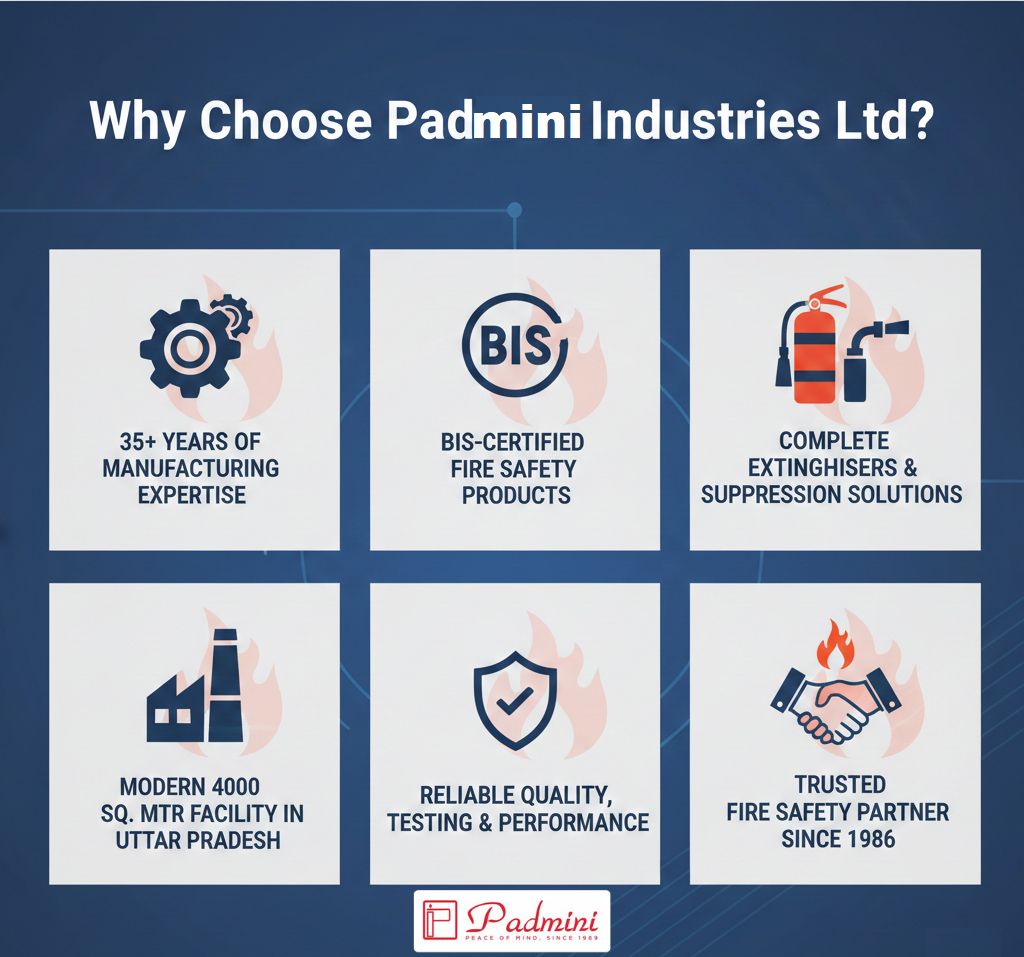
Padmini is not just a supplier — we are a 35+ year-old Indian manufacturer trusted across industries for reliable fire protection.
Our Strengths
- In-house manufacturing since 1989
- Expanded into fire safety in 2002
- BIS-certified extinguishers & equipment
- Complete suppression solutions
- Modern 4000 sq. mtr facility in Dundhera, Baghpat
- Commitment to quality, testing, and durability
- Trusted by industrial, commercial & institutional sectors
When you work with Padmini, you get:
- Correct knowledge
- Reliable manufacturing
- Tested and certified products
- Strong technical support
- Long-term safety partnership
7. Final Thoughts
Fire extinguishers and fire suppression systems serve different purposes. One is manual, low-cost, and essential for compliance, while the other is automatic, advanced, and crucial for high-risk environments.
Understanding the difference helps you create a safer, more compliant workplace.
CTA:
Explore the right fire protection solution for your facility—contact us today to get expert guidance and find the perfect system for your safety needs.




Leave a Reply