
Fire safety in India has evolved significantly over the past decade. Yet one confusion remains common across factories, offices, warehouses, institutions and high-rise buildings — the difference between fire fighting systems and fire protection systems.
Although these terms are often used interchangeably, they serve different purposes in an overall life-safety strategy. Understanding the difference is essential for compliance, safety planning, budgeting, and selecting the right equipment for your facility.
At Padmini Industries Ltd, we work closely with industrial and commercial clients across India, and we see how choosing the right combination of systems directly impacts workplace safety. This guide explains everything in clear, practical language so you can make informed, responsible decisions for your premises.
1. What Are Fire Protection Systems? (Passive Safety)

Fire Protection = Preventing fire from starting or spreading.
Ye systems fire ko control karne ki koshish nahi karte — balki fire ke impact ko slow down karte hain so that people can evacuate safely and property damage remains limited.
Role of Fire Protection Systems
- Slow the spread of flames and smoke
- Create safe evacuation time
- Protect structural integrity
- Reduce heat transmission
- Prevent complete building loss
Examples of Passive Fire Protection
- Fire-resistant doors
- Fire-rated walls, ceilings & glass
- Fire-stopping sealants
- Cable coatings
- Compartmentation systems
- Smoke barriers
- Fire dampers
- Intumescent paints
In short:
Passive protection silently works in the background. It does not require human operation or electricity.
2. What Are Fire Fighting Systems? (Active Safety)
Fire Fighting = Detecting, controlling or extinguishing fire actively.
These systems operate when a fire actually occurs and require activation — manual or automatic.
Role of Fire Fighting Systems
- Detect fire early
- Alert people and authorities
- Control flames before they spread
- Suppress fire using water, foam, gas or chemicals
- Support evacuation and rescue
Examples of Active Fire Fighting
- Fire detection systems (smoke, heat, multi-sensor detectors)
- Fire alarms & control panels
- Fire extinguishers
- Fire hydrant systems
- Sprinkler systems
- Water mist systems
- Fire suppression gases
- Hose reels, hoses & cabinets
- Pump rooms
- Fire hydrant and landing valves
In short:
Active firefighting systems take action during a fire to stop it and reduce damage.
3. Fire Protection vs Fire Fighting: Key Differences (Simple Explanation)
| Parameter | Fire Protection Systems (Passive) | Fire Fighting Systems (Active) |
|---|---|---|
| Purpose | Stop fire from spreading | Detect, control and extinguish fire |
| Operation | Always active, no trigger needed | Works only when activated |
| Components | Doors, walls, sealants, structure | Hydrants, alarms, sprinklers, extinguishers |
| Human Involvement | None | Sometimes required (manual systems) |
| Cost | Mostly one-time investment | Higher recurring cost (maintenance) |
| Maintenance | Low | Regular servicing mandatory |
| Location | Integrated into the building | Installed as equipment & systems |
| Effectiveness | Limits fire impact | Stops fire at source or early stage |
4. How Both Systems Work Together
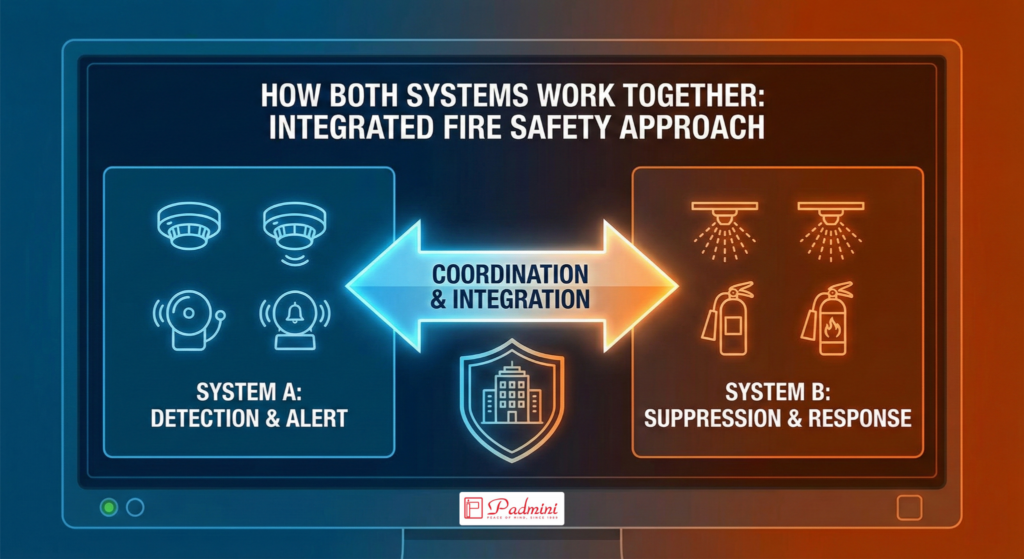
A building is safest when both systems work as a team.
Example:
- Passive protection slows the fire for 20–120 minutes
- Active firefighting controls and suppresses it
- People get enough time to escape
- Property damage remains minimal
This layered defence is the backbone of all modern fire safety strategies.
5. Key Components: Complete Breakdown
✔ Fire Protection (Passive) Components
- Fire-rated walls & partitions
- Structural steel fireproofing
- Fire doors with panic hardware
- Intumescent coatings
- Fire dampers and smoke barriers
- Compartmentation solutions
- Fire-resistant cable trays, coatings & sealants
✔ Fire Fighting (Active) Components
- Fire extinguishers (ABC, CO₂, Water, Foam)
- Fire hydrant and hose reel systems
- Landing valves, hydrant valves
- Rubber hoses, hose pipes, coupling sets
- Fire alarm panels
- Detectors, MCPs, sounders
- Sprinkler systems
- Gas suppression systems (FM-200, CO₂, Novec alternatives)
- Fire pumps (jockey, main, standby)
Padmini Industries Ltd specialises in manufacturing high-performance fire fighting equipment and rubber hose solutions, ensuring certified and durable products for industrial and commercial use.
6. Legal Requirements: Where Are Both Systems Mandatory in India?
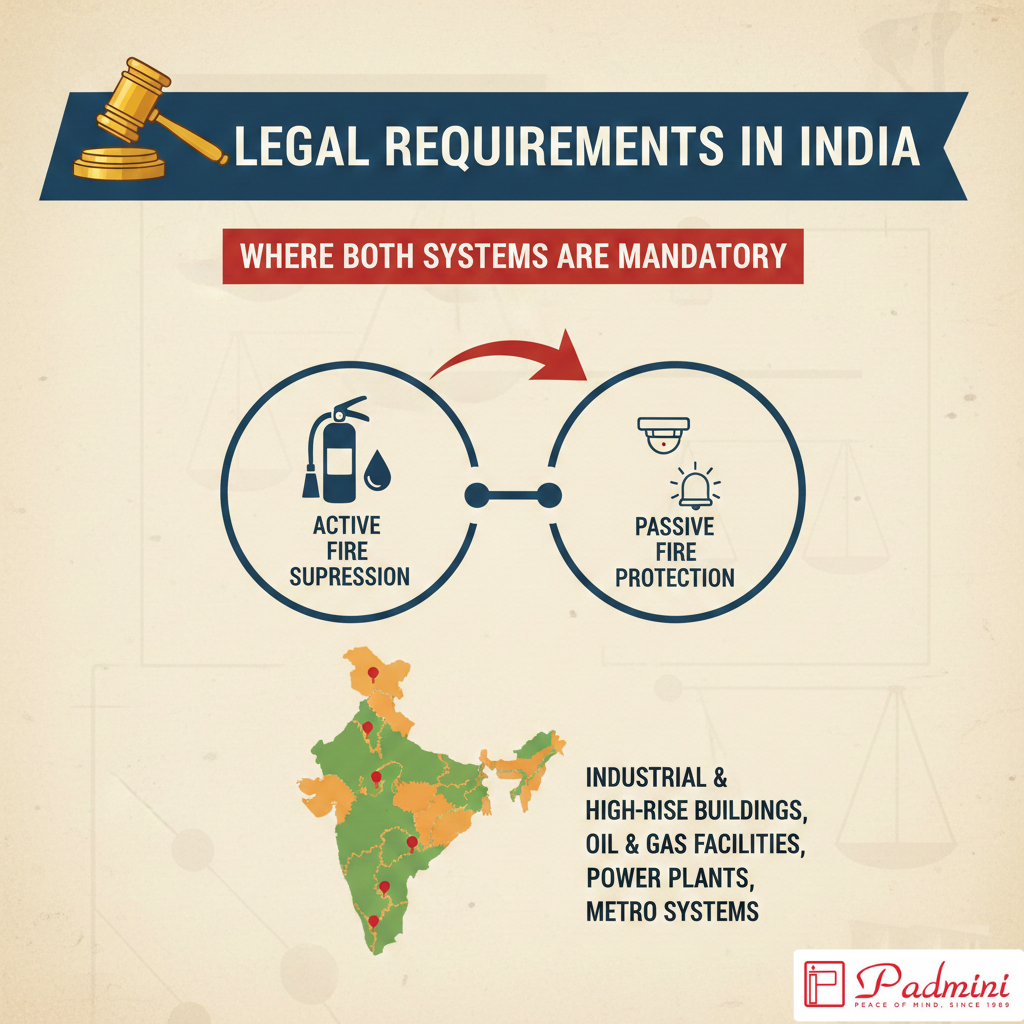
According to NBC (National Building Code 2016), BIS standards, and local fire department guidelines:
Both Fire Protection + Fire Fighting Are Compulsory In:
- Industrial plants & manufacturing units
- Warehouses above 500 sq. m
- Commercial complexes
- Schools, colleges & institutions
- Hospitals
- High-rise residential buildings
- Hotels, auditoriums & public assembly areas
- Malls, multiplexes
- IT parks, offices & corporate buildings
Why?
Because Indian regulations focus on life safety, compartmentation, early detection, and quick suppression.
Passive systems ensure safe escape.
Active systems ensure rapid fire control.
Dono ka combination legal compliance + practical safety ki requirement hai.
7. Cost & Maintenance Differences (Practical View)
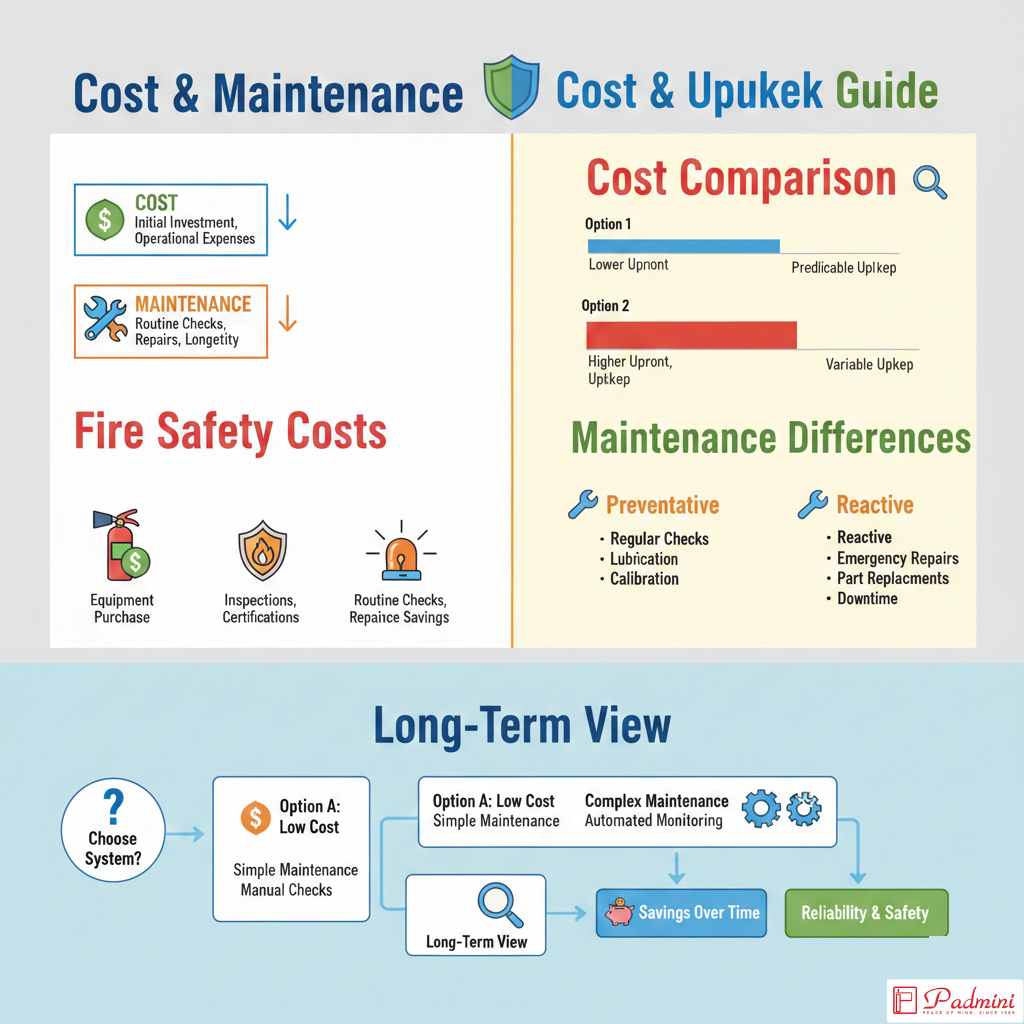
Fire Protection (Passive)
- Mostly one-time cost
- Minimal maintenance
- Long lifespan (10–20+ years)
- Cost-effective for large buildings
Fire Fighting (Active)
- Higher upfront cost
- Monthly/quarterly maintenance required
- Annual testing & certifications mandatory
- More moving parts, hence more upkeep
For an industrial facility, annual fire safety maintenance is not optional — it is essential for safety, insurance claims and legal compliance.
8. Why Indian Industries Prefer a Combined Approach
Based on our 35+ years of experience at Padmini Industries Ltd, industries choose a combined fire safety strategy because:
- Fires spread extremely fast in industrial setups
- Electrical and chemical hazards are common
- Downtime cost is very high
- Insurance policies demand certified fire systems
- Passive + active systems together reduce loss significantly
A balanced fire safety plan helps organisations protect workers, assets, and business continuity.
9. About Padmini Industries Ltd (Personalized Section)
Founded in 1986 by Mr. S.K. Jain and his brothers, Padmini Industries Ltd began as a small trading business supplying industrial hoses. With dedication and continuous innovation, we entered manufacturing by 1989 and expanded into fire safety in 2002.
Today, with 35+ years of expertise, we operate from a modern 4000 sq. meter facility in Dundhera, District Baghpat (U.P.), serving India’s:
- Industrial plants
- Commercial complexes
- Institutions
- Infrastructure projects
We provide BIS-certified fire fighting equipment, premium rubber hose solutions, and integrated firefighting product lines designed for real-world durability and performance.
10. Final Words: Which System Should You Choose?
Both.
A fire-safe building is never dependent on only one type of system.
- Fire Protection (Passive) = slows the fire
- Fire Fighting (Active) = stops the fire
Together, they create a safe workplace that protects people, property and operations.
CTA — Tailored for Padmini
Explore Advanced Industrial-Grade Fire Safety & Fire Fighting Solutions from Padmini Industries Ltd.
Protecting Lives & Assets Since 1986.




Leave a Reply