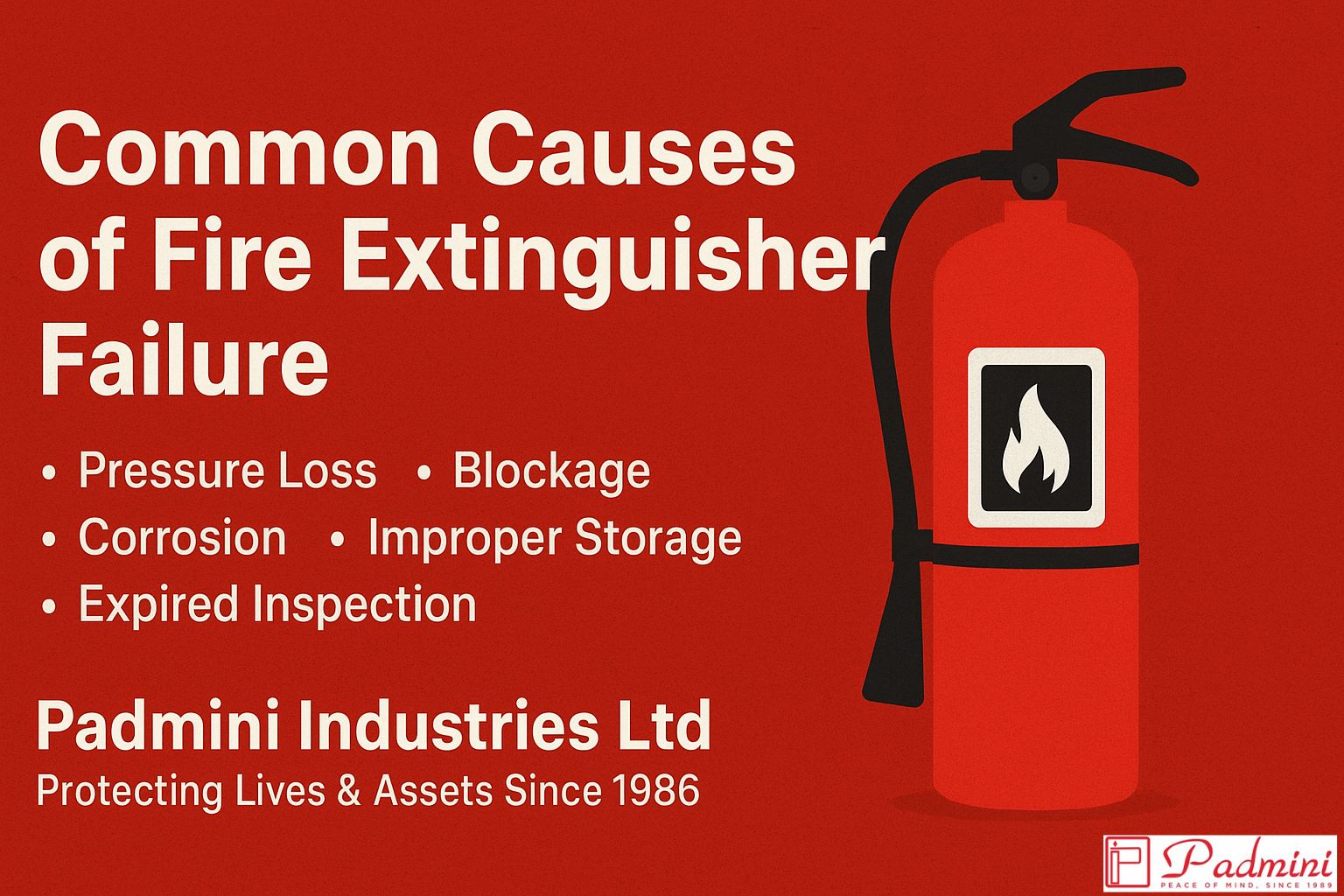
Fire extinguishers are vital life-saving devices in industries, commercial establishments, and institutional spaces. They are the first line of defense against small fires, often preventing major accidents and losses. However, a fire extinguisher is only effective if it is in proper working condition. Even high-quality extinguishers can fail during emergencies if they are not maintained or handled correctly.
At Padmini Industries Ltd, we are committed to protecting lives and assets with dependable fire fighting equipment. With over 35 years of experience, we provide BIS-certified fire extinguishers, complete suppression systems, and maintenance services across India. Understanding the common reasons behind fire extinguisher failure can help businesses and individuals stay prepared and safe.
1. Pressure Loss
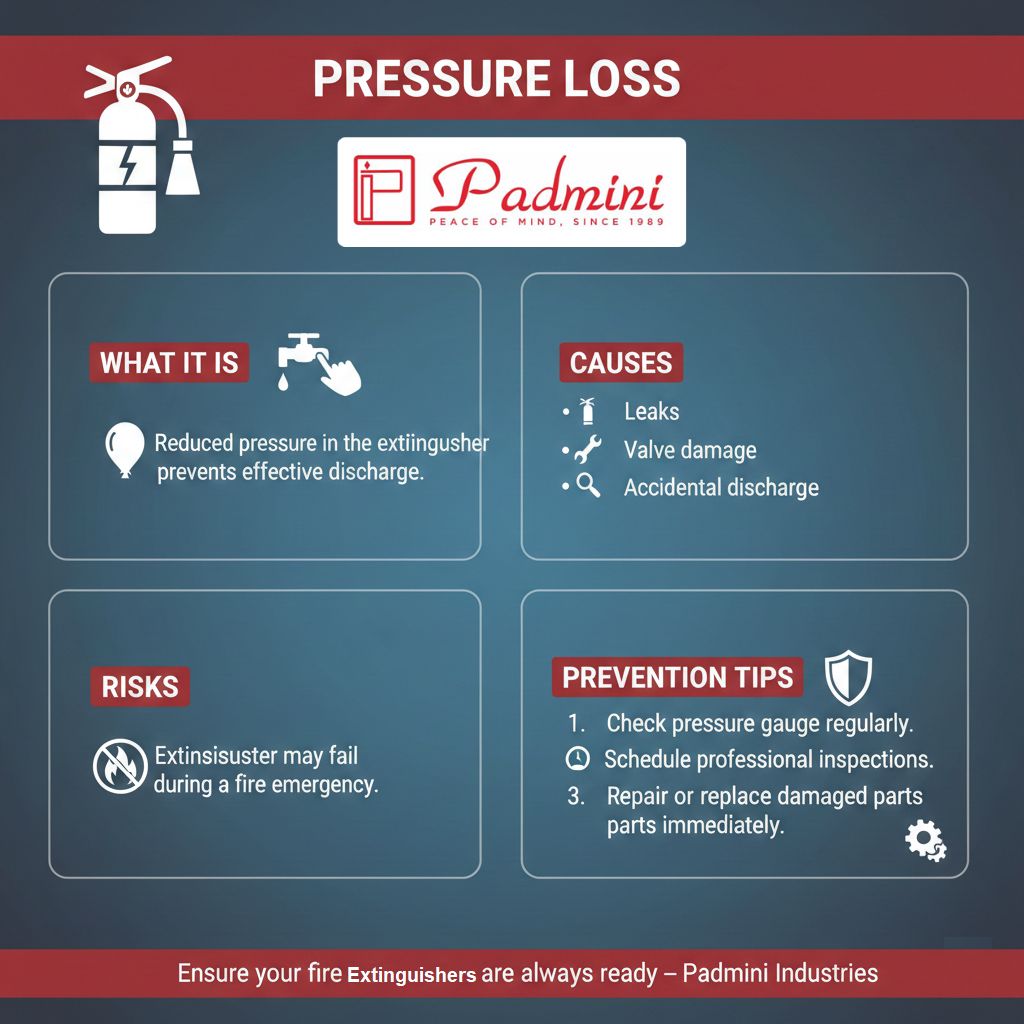
One of the most common reasons fire extinguishers fail is loss of pressure. Most extinguishers rely on stored pressure to release their extinguishing agent effectively. If the pressure is too low, the agent may not reach the fire, rendering the extinguisher useless.
Causes of pressure loss include:
- Minor leaks around valves or seals.
- Accidental partial discharge during handling.
- Damaged hoses or cylinders.
How to prevent pressure loss:
- Regularly check the pressure gauge to ensure it is in the green zone.
- Schedule professional inspections for all fire extinguishers.
- Replace or repair any damaged parts immediately.
Regular pressure checks ensure that your fire extinguishers are ready to act the moment a fire breaks out.
2. Blockage in the Nozzle or Hose
A blocked nozzle or hose is another common reason fire extinguishers fail. Dust, dirt, or dried chemicals can accumulate inside the nozzle, preventing the extinguishing agent from flowing freely.
Why this is dangerous:
- During a fire, a blocked nozzle can delay response time.
- It may cause incomplete discharge, leaving the fire uncontrolled.
Prevention measures:
- Clean nozzles and hoses regularly to remove dirt or debris.
- Avoid storing extinguishers in dusty or dirty areas.
- Inspect hoses for kinks or cracks during maintenance checks.
Keeping the discharge path clear ensures that the extinguisher operates smoothly when needed.
3. Corrosion and Wear
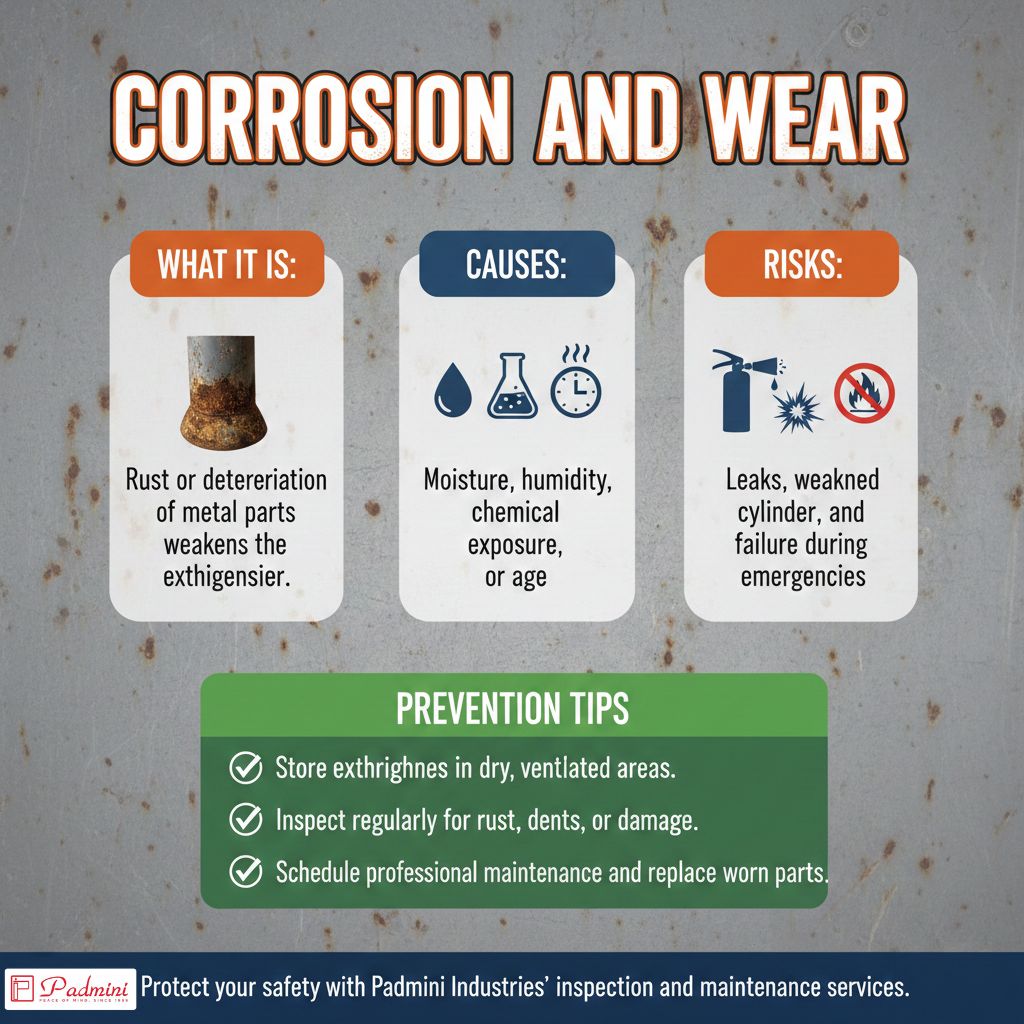
Corrosion is a silent threat that can compromise the integrity of fire extinguishers, especially in humid or damp environments. Rust or deterioration of metal parts can lead to leaks, weak cylinders, and ultimately, failure during use.
Key causes of corrosion:
- Exposure to moisture, humidity, or chemical fumes.
- Lack of protective coatings or regular inspections.
- Age and general wear over time.
Preventive actions:
- Store extinguishers in dry, ventilated areas.
- Inspect cylinders for rust, dents, or other damage.
- Schedule periodic professional maintenance to replace worn-out parts.
By addressing corrosion early, businesses can extend the lifespan of their extinguishers and ensure optimal performance.
4. Improper Storage
Fire extinguishers must be stored correctly to be effective. Improper storage can lead to both mechanical failures and delayed access during emergencies.
Common storage mistakes:
- Placing extinguishers near heat sources or direct sunlight.
- Keeping them outdoors or in damp areas.
- Blocking access with furniture or equipment.
Best storage practices:
- Mount extinguishers at visible, easily accessible locations.
- Avoid extreme temperatures and humid areas.
- Clearly mark extinguisher locations and ensure employees are aware of them.
Proper storage not only preserves the extinguisher’s functionality but also ensures quick access during a fire.
5. Expired or Missing Inspection Tags
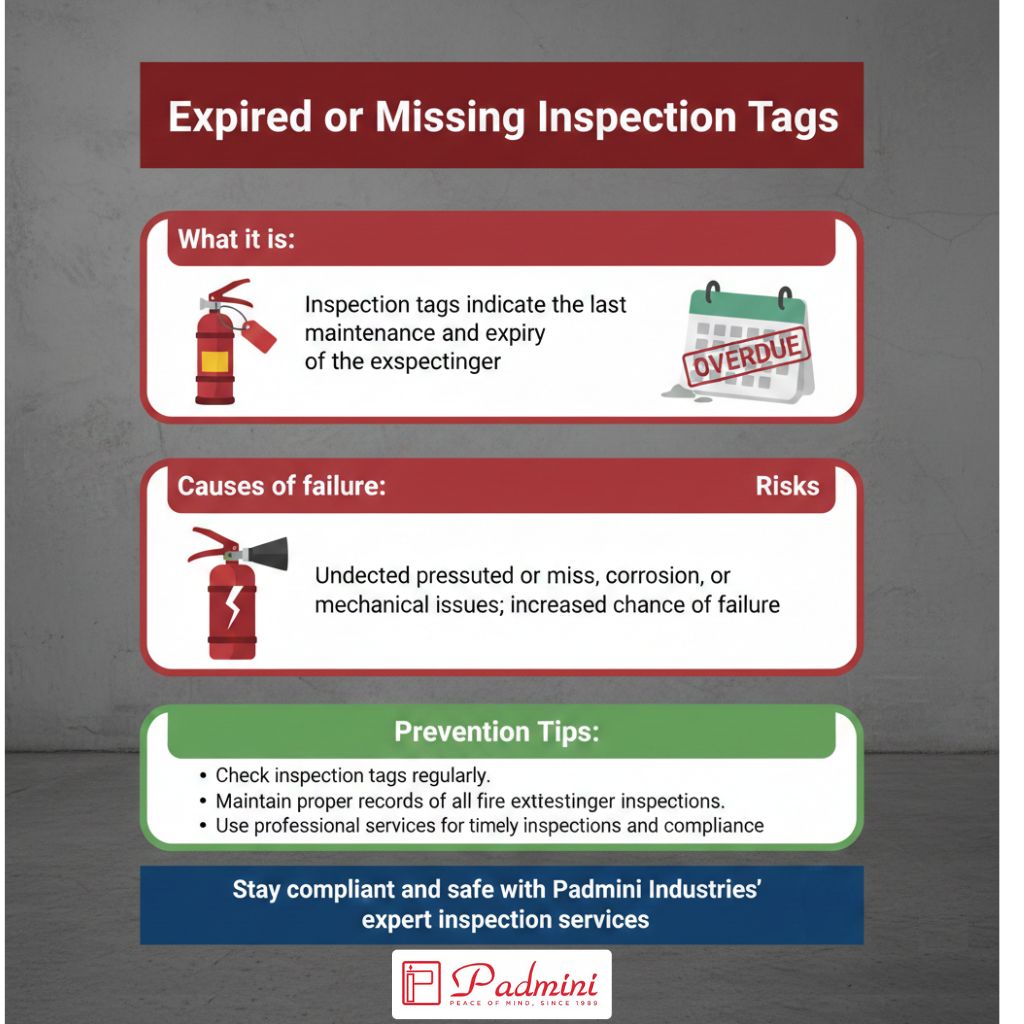
Fire extinguishers require regular inspections as per BIS (Bureau of Indian Standards) and manufacturer guidelines. An expired or missing inspection tag often indicates that maintenance has been overlooked.
Risks include:
- Overlooked pressure loss, corrosion, or mechanical damage.
- Increased chances of failure during emergencies.
- Non-compliance with fire safety regulations.
Recommended actions:
- Check inspection tags regularly and schedule inspections on time.
- Maintain proper records for all fire safety equipment.
- Use Padmini Industries’ professional inspection and maintenance services for certified compliance.
A simple check of the inspection tag can prevent major fire safety failures.
Conclusion
Fire extinguishers are only as reliable as the care they receive. Common causes of failure—pressure loss, nozzle blockages, corrosion, improper storage, and expired inspection tags—can all be prevented with regular maintenance, proper storage, and timely inspections.
At Padmini Industries Ltd, we are committed to ensuring that your fire safety equipment is always ready when you need it. From BIS-certified extinguishers to comprehensive inspection and maintenance services, we provide everything under one roof to protect lives and assets across India.
CTA:
Check Your Fire Extinguishers Today to Ensure They Work When You Need Them. Contact Padmini Industries for expert fire safety solutions and professional maintenance services.




Leave a Reply