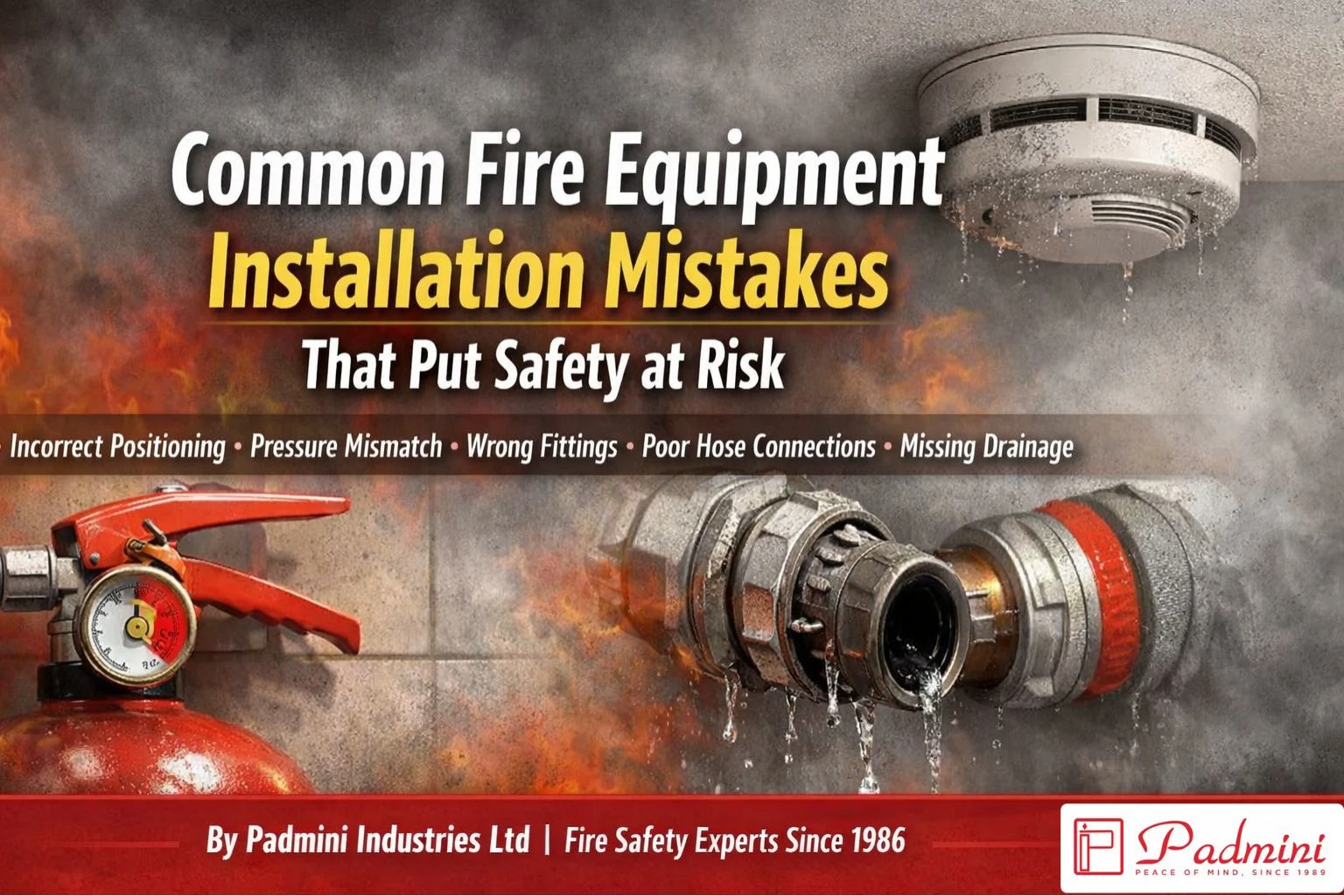
Fire fighting equipment plays a critical role in protecting lives, infrastructure, and business continuity. However, even the best quality fire equipment can fail during an emergency if it is not installed correctly. Across industrial plants, warehouses, commercial buildings, and institutions in India, installation-related errors remain one of the most common reasons for fire system failure.
At Padmini Industries Ltd, with over 35 years of manufacturing and fire safety experience, we have closely observed how small installation mistakes can lead to major safety risks. This article highlights the most common fire equipment installation mistakes, explains why they are dangerous, and shares expert guidance for correct layout and setup to ensure compliance and reliable performance.
Why Correct Fire Equipment Installation Matters
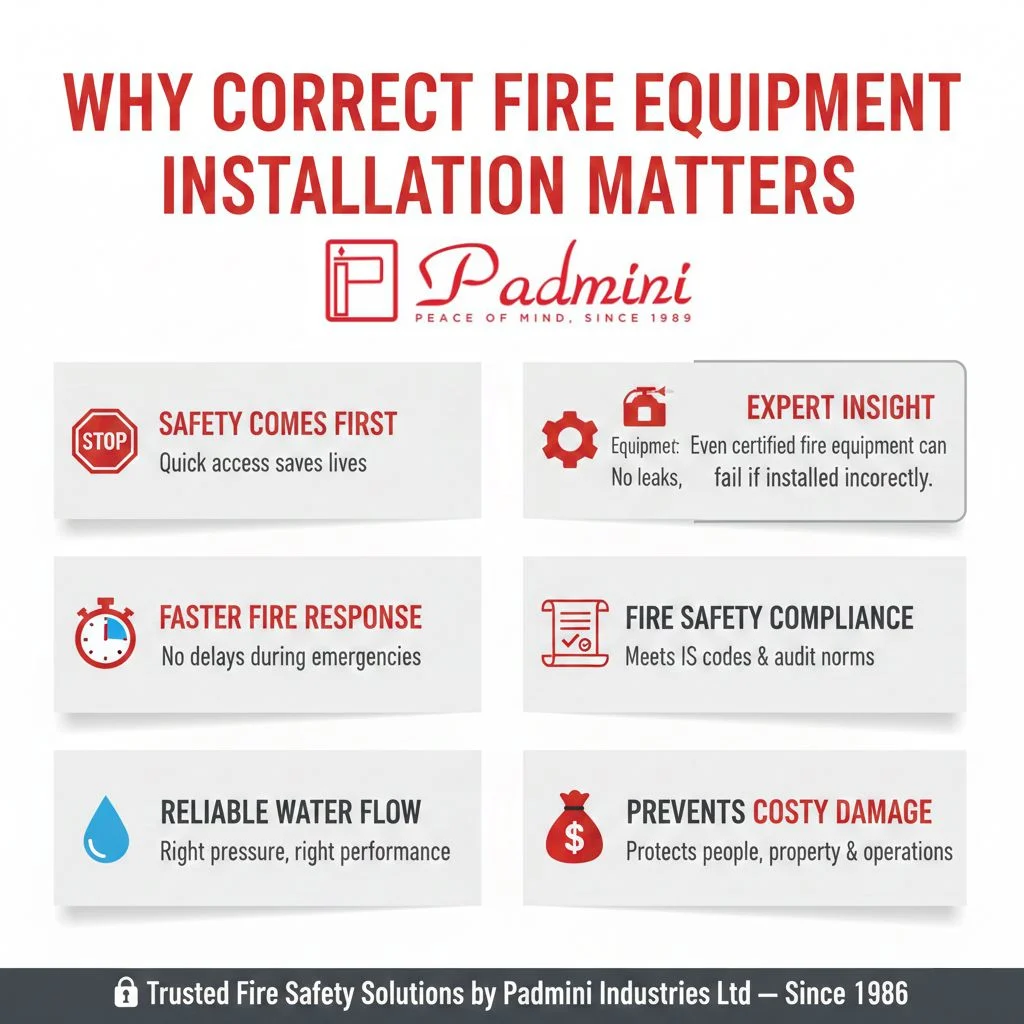
Fire safety systems are not decorative fittings. They are engineered systems designed to work under high pressure, extreme heat, and stressful conditions. Incorrect installation can result in:
- Delayed fire response
- Equipment malfunction during emergencies
- Rejection during fire audits or NOC inspections
- Higher repair and replacement costs
- Risk to human life and valuable assets
This is why installation quality is just as important as product quality.
1. Incorrect Positioning of Fire Equipment
One of the most common mistakes is poor positioning of fire fighting equipment such as hose reels, hydrant valves, and fire extinguishers.
Common errors include:
- Hose reels installed behind doors or obstructions
- Hydrant valves placed too high or too low
- Fire extinguishers installed far from risk-prone areas
- Poor accessibility during emergency movement
Why this is risky:
During a fire, every second matters. Equipment that cannot be accessed quickly becomes useless, regardless of its certification or build quality.
Best practice:
- Install equipment along clear escape routes
- Ensure unobstructed access
- Follow recommended mounting heights
- Plan locations based on risk zones, not convenience
2. Pressure Mismatch in Fire Fighting Systems
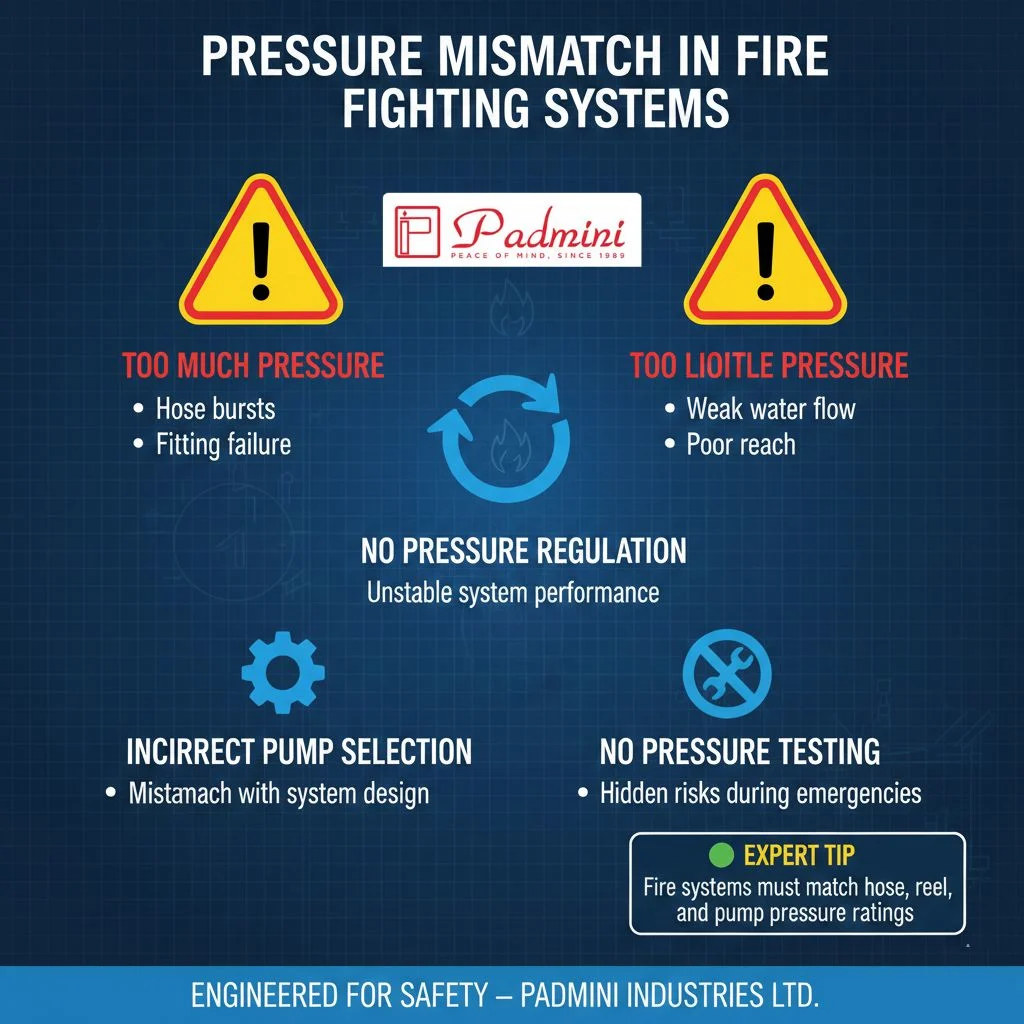
Fire hose reels and hydrant systems are designed to operate within specific pressure ranges. A frequent installation mistake is connecting equipment without matching system pressure requirements.
Typical problems:
- Hose reels connected to high-pressure lines without regulation
- Low-pressure supply leading to weak water discharge
- Pumps selected without considering system layout losses
Consequences:
- Hose bursts during operation
- Inadequate water throw during fire fighting
- Premature wear of hoses and fittings
Expert insight:
At Padmini Industries Ltd, our BIS-certified fire hoses and reels are tested for performance, but pressure regulation during installation is essential to achieve real-world reliability.
3. Use of Wrong Fittings and Connections
Another serious issue is the use of non-standard or incompatible fittings during installation.
Common fitting mistakes:
- Mixing BSP and non-BSP threads
- Using substandard clamps or couplings
- Improper sealing leading to leakage
- Using untested local adaptors
Why this compromises safety:
Wrong fittings can fail under pressure, cause leakage, or disconnect during active fire fighting — making the system unreliable when it is needed most.
Recommended approach:
- Use standardised fittings
- Match fittings with hose and valve specifications
- Avoid temporary or makeshift connections
- Ensure pressure testing after installation
4. Poor Hose Reel Connections
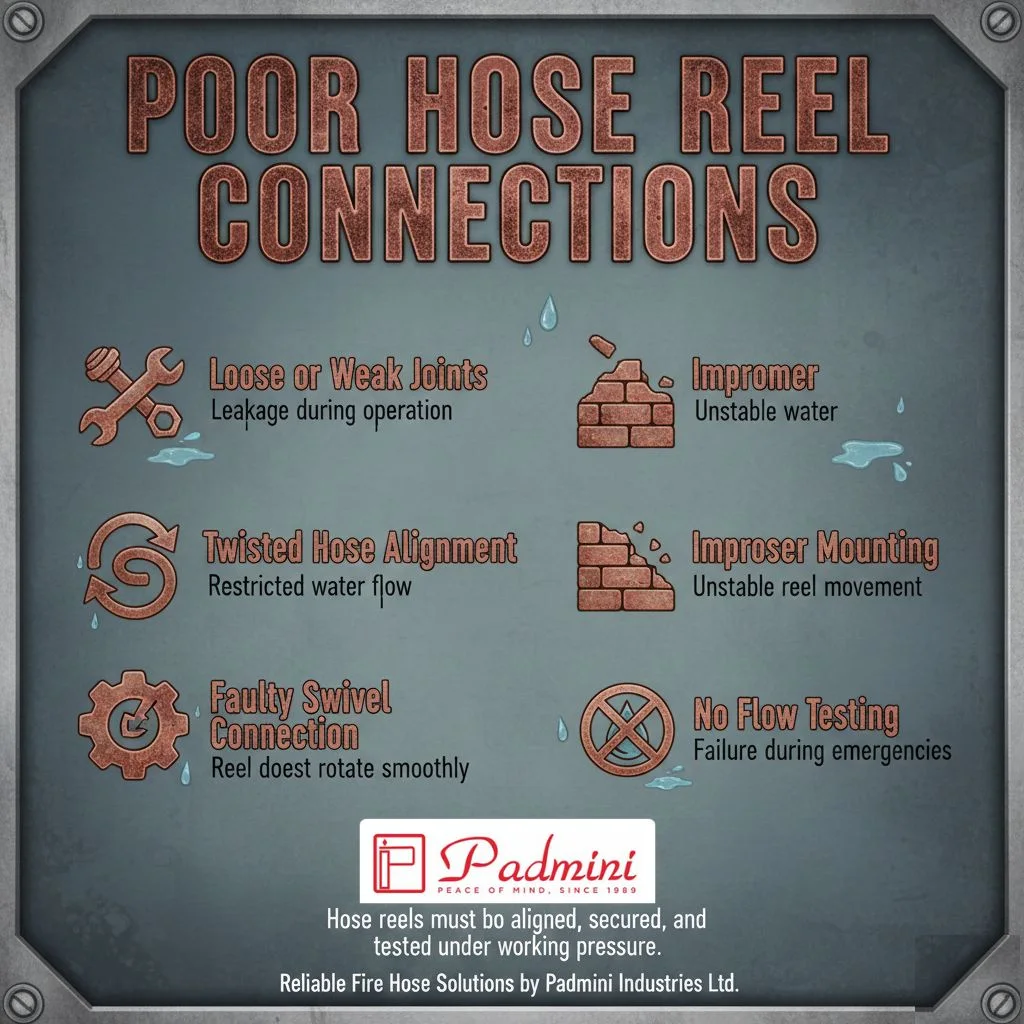
Fire hose reels are often assumed to be “simple” devices, which leads to careless installation.
Common hose reel connection issues:
- Twisted or kinked hose alignment
- Incorrect inlet connection direction
- Improper drum mounting
- Leakage at swivel joints
Impact during emergencies:
A poorly installed hose reel may jam, leak, or fail to rotate smoothly, delaying fire suppression efforts.
Correct installation practice:
- Ensure smooth hose movement
- Align reel direction with expected use
- Secure mounting on solid structural support
- Conduct live water flow testing
5. No Drainage or Vent Provisions
This is one of the most ignored but critical installation mistakes, especially in hydrant and pump systems.
What goes wrong:
- No drain valves for residual water
- Absence of air venting points
- Water stagnation inside pipes
Long-term problems:
- Internal corrosion
- Reduced flow capacity
- Pipe damage in cold or idle conditions
- System failure during fire
Expert recommendation:
Every fire system layout must include proper drainage and venting, especially in large industrial and institutional setups.
Expert Tips for Proper Fire Equipment Layout

Based on decades of manufacturing and system understanding, here are key layout guidelines from Padmini Industries Ltd:
- Plan fire equipment during the design stage, not after construction
- Follow Indian Standards (IS codes) and NBC guidelines
- Maintain uniform spacing between hydrants and hose reels
- Avoid sharp bends and unnecessary pipe length
- Ensure system compatibility between pumps, hoses, reels, and valves
- Always conduct pressure testing and flow trials
A well-planned layout improves performance, simplifies maintenance, and ensures smoother fire authority approvals.
Why Choose Experts for Fire Equipment Installation
Fire safety is not an area for trial-and-error or shortcuts. Professional installation ensures:
- Compliance with safety regulations
- Proper coordination between components
- Reliable performance during emergencies
- Long-term system durability
At Padmini Industries Ltd, we support customers with performance-driven fire fighting equipment, backed by over 35 years of engineering and manufacturing experience. From BIS-certified products to complete suppression solutions, we help ensure that what you install actually protects when it matters most.
Conclusion
Most fire safety failures are not caused by product defects, but by installation mistakes. Incorrect positioning, pressure mismatch, wrong fittings, poor hose reel connections, and missing drainage provisions can all turn a fire safety system into a liability.
Investing in correct installation is an investment in safety, compliance, and peace of mind.




Leave a Reply