Fire safety is not just about installing equipment — it is about keeping it ready when it matters most. Across India, many fire incidents turn serious not because equipment was missing, but because it was poorly maintained or non-compliant.
This 2025 guide by Padmini Industries Ltd is created to help facility managers, safety officers, and project heads understand:
- What fire fighting equipment needs regular maintenance
- How often inspections should be done
- Average price ranges by equipment category
- Factors that affect pricing and quality
- The difference between local and ISI-approved products
- Practical buying tips for government and large projects
About Padmini Industries Ltd – Industry Experience You Can Trust
At Padmini Industries Ltd, protecting lives and assets has been our mission for over 35 years. Founded in 1986 by Mr. S.K. Jain and his brothers, Padmini began as a trading firm for industrial hoses and moved into full-scale manufacturing by 1989. In 2002, we expanded into the fire safety segment to meet India’s growing demand for reliable, certified fire fighting equipment.
Today, from our 4000 sq. meter manufacturing facility in Dundhera, District Baghpat (Uttar Pradesh), we manufacture and supply BIS-certified fire fighting equipment and rubber hose solutions to industrial, commercial, and institutional clients across India.
Why Fire Fighting Equipment Maintenance Is Critical in India
As per National Building Code (NBC) of India and State Fire Department norms:
- Fire equipment must be maintained, tested, and recorded
- Non-compliance can lead to penalties, licence cancellation, or insurance rejection
- Equipment failure during emergencies can result in loss of life and property
Regular maintenance ensures:
- Equipment performs at rated pressure
- Rubber components do not crack or leak
- Valves and couplings operate smoothly
- Systems meet audit and inspection standards
Fire Fighting Equipment Maintenance Checklist (2025)

1. Fire Extinguishers
- Monthly visual inspection
- Pressure gauge within green zone
- No rust, dents, or leakage
- ISI mark clearly visible
- Refilling as per type (usually every 1–3 years)
2. Fire Hose Pipes & Rubber Hoses
- Check for cracks, cuts, or bulging
- Hydrostatic pressure testing annually
- Couplings free from corrosion
- Proper storage to avoid folding damage
3. Hydrant Valves & Landing Valves
- Open and close operation check
- Leakage from spindle or body
- Threads and flanges in good condition
- Greasing and cleaning during AMC visits
4. Fire Hose Reels
- Hose rewinds smoothly
- No leakage at joints
- Nozzle functioning correctly
- Wall brackets firmly fixed
5. Fire Pumps & Suppression Systems
- Weekly pump run test
- Pressure and flow monitoring
- Electrical and diesel systems checked
- Annual performance testing
Average Price Range by Equipment Category (India – 2025)
Prices are indicative and may vary based on specification and certification.
| Equipment Category | Approx Price Range (₹) |
|---|---|
| Fire Hose Pipes (ISI) | ₹1,800 – ₹5,500 |
| Rubber Industrial Hoses | ₹250 – ₹900 per meter |
| Landing Valves | ₹1,200 – ₹3,500 |
| Hydrant Valves | ₹3,000 – ₹9,000 |
| Hose Reel Drum Assembly | ₹6,000 – ₹15,000 |
| Fire Extinguishers | ₹1,200 – ₹6,500 |
| Fire Pumps | ₹45,000 – ₹2,50,000 |
At Padmini Industries Ltd, pricing reflects certified materials, controlled manufacturing, and long service life, not short-term cost cutting.
Key Factors That Affect Fire Fighting Equipment Prices
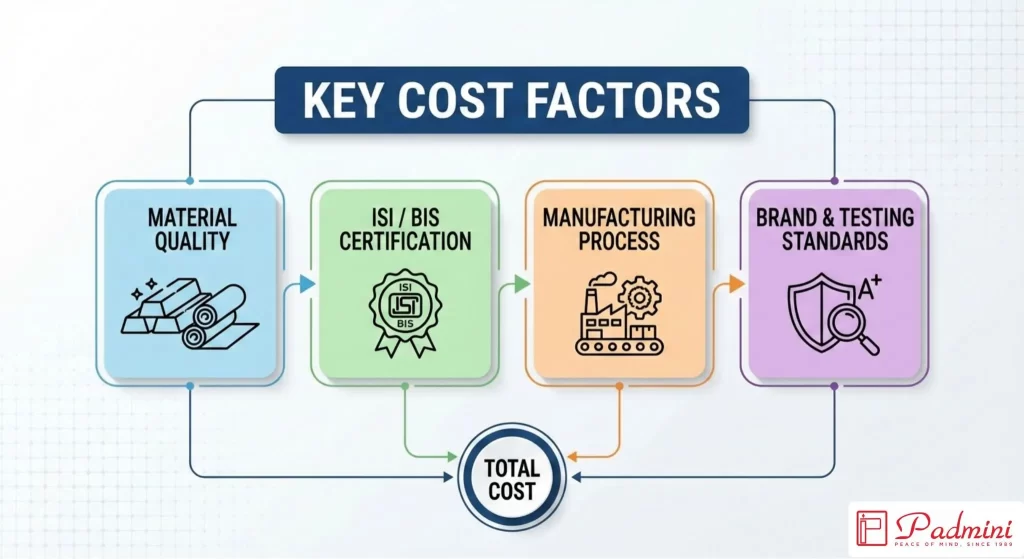
1. Material Quality
- Gunmetal, aluminium alloy, or reinforced rubber increases durability
- Inferior materials reduce pressure handling capacity
2. Certification & Compliance
- BIS / ISI-marked products cost more but last longer
- Certified products are mandatory for audits and government projects
3. Manufacturing Process
- In-house testing and quality checks add value
- Handmade or untested products increase failure risk
4. Brand & Manufacturer Credibility
- Established manufacturers with testing facilities offer consistency
- Unknown local suppliers often compromise on standards
Local Products vs ISI-Approved Products – A Practical Comparison
| Aspect | Local Non-Certified | ISI-Approved (BIS) |
|---|---|---|
| Price | Lower | Slightly higher |
| Compliance | Not accepted | Fully compliant |
| Life Span | Short | Long |
| Pressure Rating | Unreliable | Tested & certified |
| Insurance Approval | Often rejected | Accepted |
| Govt Projects | Not allowed | Mandatory |
Important:
For factories, hospitals, malls, and government buildings, ISI-approved equipment is not optional — it is a requirement.
Buying Tips for Government Tenders & Large Projects
If you are sourcing fire fighting equipment for CPWD, PWD, PSU, EPC, or institutional projects, keep these points in mind:
- Always specify BIS / ISI standards in BOQ
- Ask for test certificates and batch traceability
- Prefer manufacturers with own factory and testing setup
- Avoid traders offering “equivalent” or “near-ISI” products
- Check AMC and after-sales support availability
- Ensure products match NBC and State Fire norms
With manufacturing and supply under one roof, Padmini Industries Ltd supports both tender documentation and inspection requirements.
Why Regular Inspection & AMC Matters More Than Ever
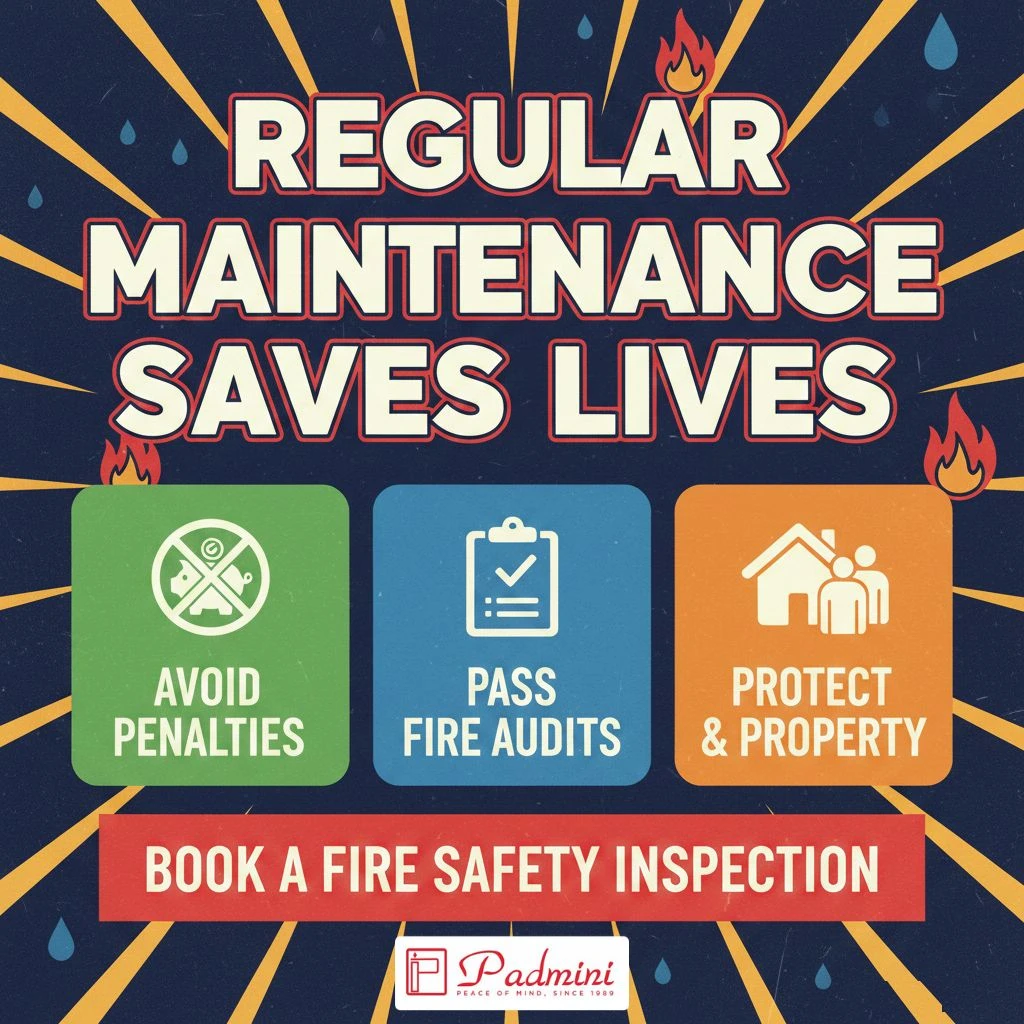
Annual Maintenance Contracts (AMC) ensure:
- Timely testing and servicing
- Record keeping for audits
- Reduced emergency failures
- Compliance during fire department inspections
Many facilities only discover faults after an inspection notice — by then, time and cost both increase.
Book a Fire Safety Inspection with Padmini Industries Ltd
With decades of manufacturing expertise and deep understanding of Indian fire safety standards, Padmini Industries Ltd helps facilities stay compliant, safe, and audit-ready.
👉 Book a Fire Safety Inspection
Ensure your fire fighting equipment is tested, certified, and ready when needed.




Leave a Reply