Ensuring Safety, Protecting Lives, and Staying Compliant
At Padmini Industries Ltd, we understand that fire safety is not just about installing equipment—it’s about maintaining it diligently. With over 35 years of manufacturing experience in fire-fighting equipment and rubber hoses, we have helped industrial, commercial, and institutional sectors across India remain compliant and ready for emergencies. Regular maintenance of fire-fighting equipment is critical to safeguarding lives, assets, and your organization’s reputation.
This guide provides a step-by-step monthly and annual maintenance checklist, testing logs, and insights on common faults found during audits. By following this, businesses can ensure their fire safety systems are fully operational and compliant with safety regulations.
Why Regular Maintenance of Fire Fighting Equipment Matters
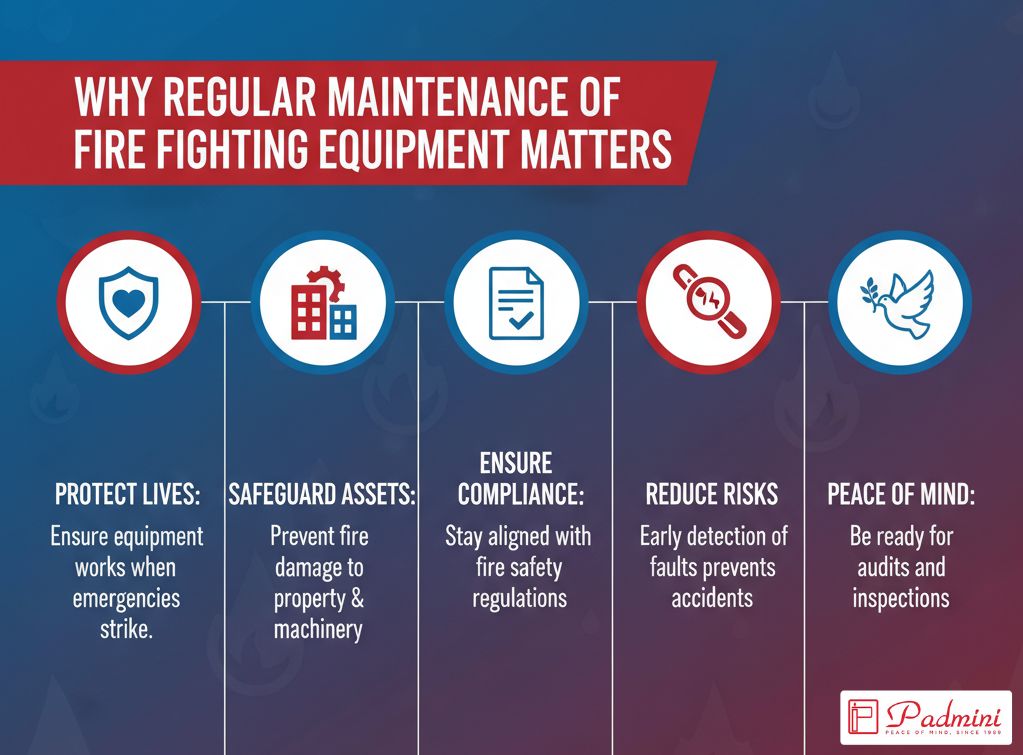
Neglected fire-fighting systems can fail at critical moments. Common risks include:
- Expired or empty fire extinguishers
- Blocked or non-functional hydrants
- Faulty fire alarm systems
- Incomplete records leading to non-compliance
Regular inspections reduce fire risks, ensure regulatory compliance, and help in early detection of faults. Partnering with a trusted provider like Padmini Industries Ltd, with BIS-certified products, ensures quality, reliability, and performance.
Inspection Frequency
Monthly Checks
Monthly inspections ensure that equipment is functional and ready to use. Key points include:
- Fire extinguishers: Pressure gauge, hose condition, pin & seal
- Fire hydrants & hose reels: Accessibility, water flow, leakage, valve operation
- Fire alarm panels: Power supply, indicator lights, battery status
- Emergency signage & escape routes: Visibility and correctness
Annual Checks
Annual inspections are more thorough and are often required for legal compliance:
- Complete fire extinguisher servicing and refilling
- Hydrant system flushing and pressure testing
- Fire alarm and detection system testing
- Suppression system cylinder inspection (CO2, Foam, etc.)
- Staff training, safety drills, and log audits
Step-by-Step Checklist for Each Equipment Type
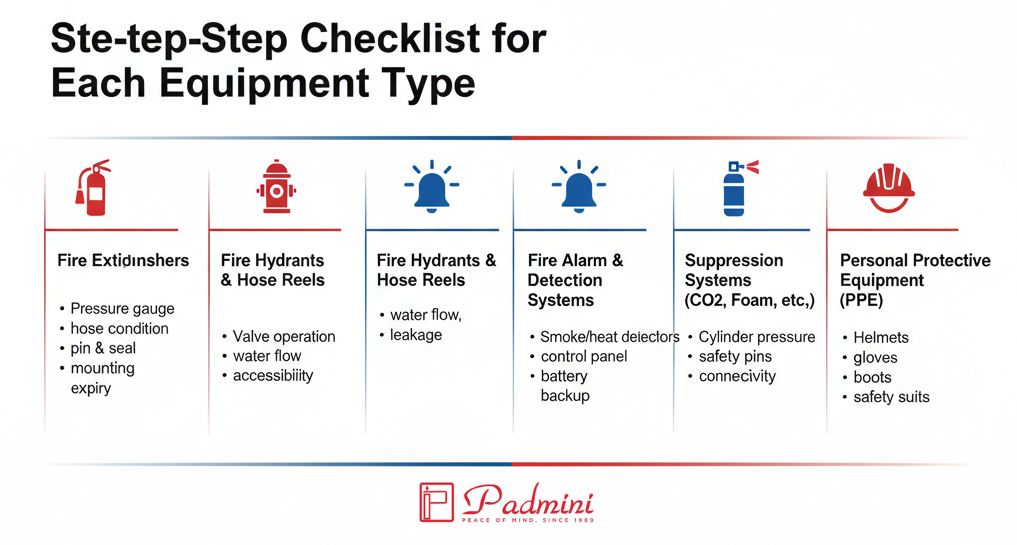
1. Fire Extinguishers
- Check pressure gauge is in the green zone
- Inspect hose and nozzle for damage
- Confirm pin and tamper seal are intact
- Ensure the extinguisher is mounted correctly and visible
- Verify expiry date and servicing history
2. Fire Hydrants & Hose Reels
- Inspect valves, hose reels, and couplings
- Ensure no leaks and smooth valve operation
- Check water flow and pressure
- Ensure hydrants are accessible and properly signed
3. Fire Alarm & Detection Systems
- Test smoke and heat detectors
- Verify control panel indicators and alarms
- Check battery backup and replace if required
- Ensure sirens and visual alerts are functional
4. Suppression Systems (CO2, Foam, etc.)
- Check cylinder pressure and weight
- Inspect safety pins and nozzles
- Verify system connectivity and automatic triggers
- Conduct functional tests with certified professionals
5. Personal Protective Equipment (PPE)
- Inspect helmets, gloves, boots, and suits
- Replace damaged or worn-out PPE
- Ensure all staff have access to functioning PPE
Testing Records & Log Sheet Template
Maintaining detailed records is critical for audits and regulatory compliance. A simple log sheet should include:
| Equipment Type | Date Checked | Inspector Name | Status (Pass/Fail) | Action Required | Next Check Date |
|---|---|---|---|---|---|
| Fire Extinguisher | 10/11/2025 | Rajesh Kumar | Pass | – | 10/12/2025 |
| Hydrant System | 10/11/2025 | Suman Verma | Fail | Repair valve | 15/11/2025 |
| Fire Alarm Panel | 10/11/2025 | Anil Singh | Pass | – | 10/12/2025 |
Tip: Maintain both digital and physical copies of logs to ensure compliance and easy retrieval during audits.
Common Faults Found in Annual Audits
During annual inspections, the most frequent issues include:
- Expired or discharged extinguishers — risk of failure in emergencies
- Blocked hydrants or non-functional hose reels — caused by dirt, corrosion, or mechanical failure
- Faulty fire alarm panels or detectors — due to battery issues, wiring problems, or sensor failures
- Leaking suppression system cylinders — reduces effectiveness of CO2 or foam systems
- Incomplete records or missing signage — can lead to non-compliance fines
Addressing these issues proactively ensures your fire systems remain operational and reduces the chance of costly incidents.
Best Practices for Maintenance
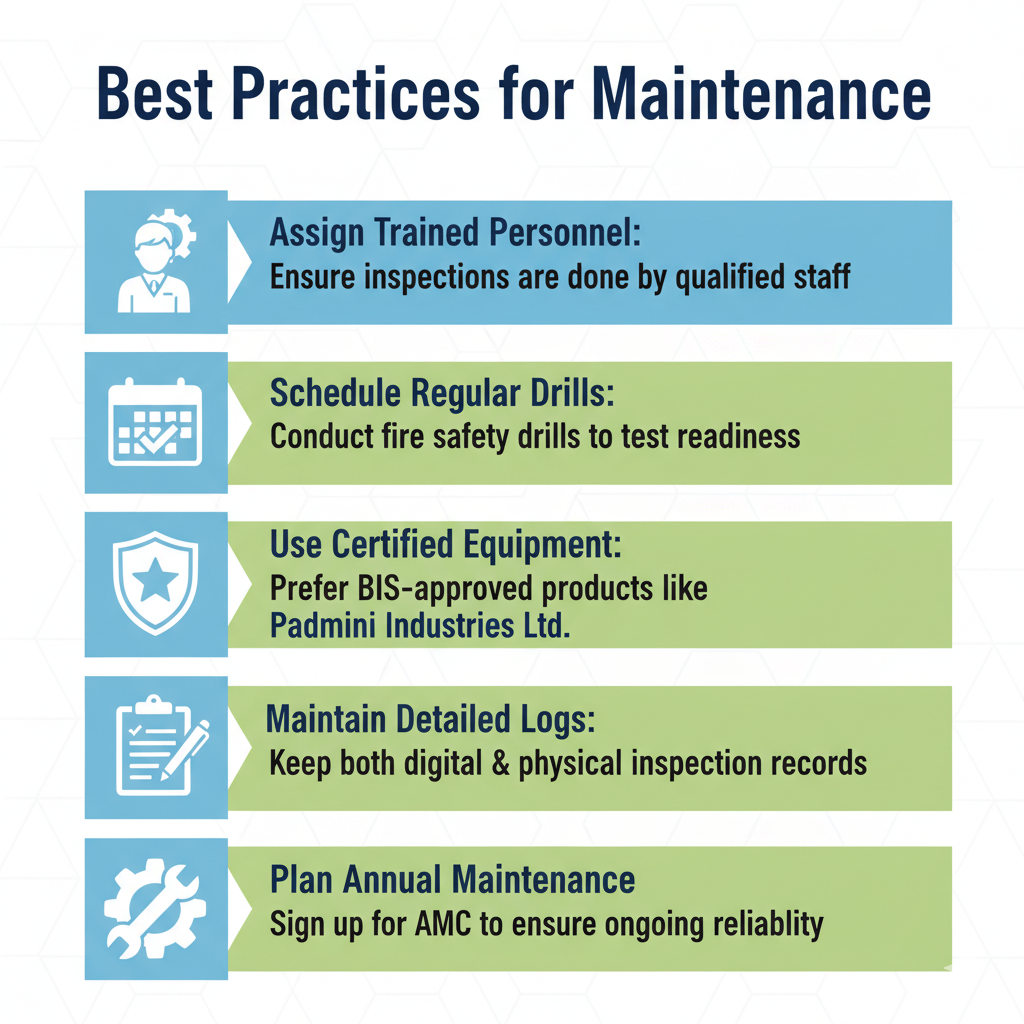
- Assign trained personnel for inspections and record-keeping
- Conduct regular fire drills and emergency response training
- Use BIS-certified products from trusted providers like Padmini Industries Ltd
- Schedule monthly and annual checks and keep a detailed log
- Plan Annual Maintenance Contracts (AMC) to ensure ongoing reliability
Conclusion
Proper maintenance of fire-fighting equipment is not optional—it’s essential. Businesses that follow monthly and annual checklists reduce risk, stay compliant, and protect lives and assets. At Padmini Industries Ltd, we provide quality equipment, certified services, and expert inspections to help organizations across India maintain fire safety standards.
Don’t leave safety to chance.
✅ Schedule a Free Fire Safety Inspection Today and ensure your fire systems are always ready.




Leave a Reply